
Italian Wine’s 2026 Identity Fight Hits the Dinner Table
Tariffs, oversupply, and lighter-style pressure are exposing a deeper problem in Italian wine: too many bottles lost their place at dinner.
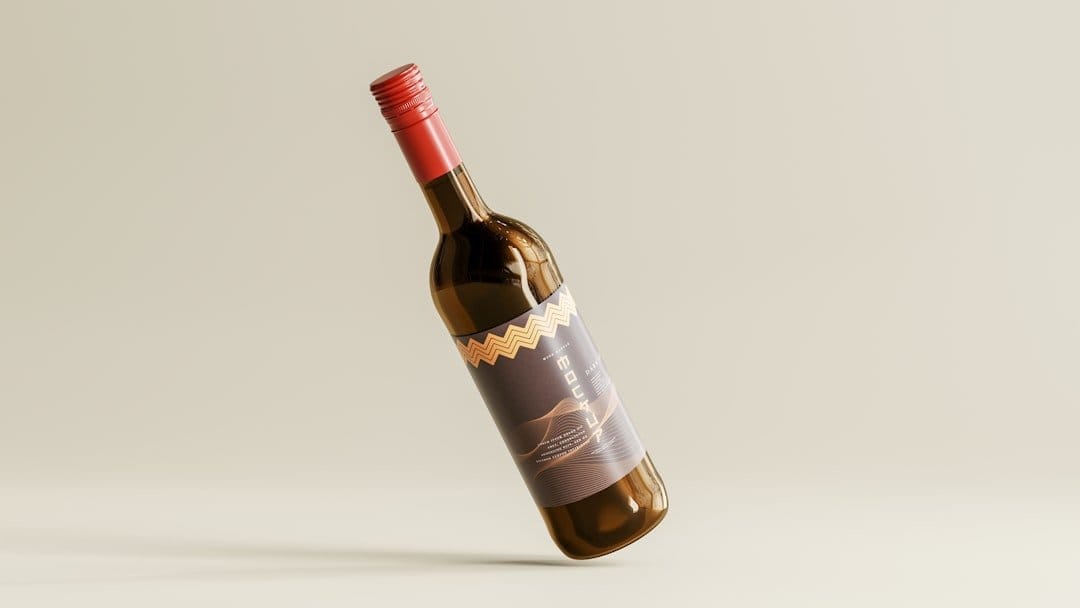
Last week in Los Angeles, I was staring at an Italian wine list with one famous red priced like a minor medical procedure. Heavy bottle. Serious font. A denomination doing a lot of emotional labor. And I had one very unromantic thought: do I actually want to drink this with dinner, or am I supposed to admire it like a luxury watch?
That’s the whole problem, honestly. What looks like Italian wine’s 2026 identity fight after tariffs and lighter-style pressure is really a fight over what still deserves a place on the table. Tariffs are real. Export pain is real. But the deeper issue is more awkward: too much Italian wine got optimized to travel well on spreadsheets, shelves, and tasting notes — not necessarily with pasta, fish, roast chicken, or the kind of dinner where two hours disappear and nobody checks the time.
As an Italian, this drives me insane. I grew up in Ivrea, where even normal meals had structure. Rhythm. Logic. Wine wasn’t there to give a TED Talk. It was there to make food taste more like itself. My nonna would never phrase it that way because she was not, thankfully, a startup founder with a Substack brain. But she’d agree with the principle: a wine that wins in the tasting room and loses at dinner has missed the point.
And 2026 is forcing that point back into the open.
Italian wine’s 2026 identity fight after tariffs and lighter-style pressure is really a taste fight
The obvious villain is the U.S. market. Fair. According to Gambero Rosso, Italian wine exports in the first four months of 2026 fell 6.8% by value overall, and the U.S. got hit much harder: -15.4% in value and -6.3% in volume. That’s not a wobble. That’s pain.
The Drinks Business put it bluntly: Italian producers are “shouldering rising tariffs in the US, historically their lead market.” When your biggest customer gets more expensive to serve, every lazy assumption in your business gets exposed at once.
But tariffs didn’t create this identity crisis. They just kicked the door open.
If a wine only works when export demand is frothy, restaurant markups are silly, and buyers are willing to order by appellation alone, then that wine never had a stable identity. It had momentum. Big difference. One survives a bad year. The other starts sweating the second diners behave like rational adults.
That’s why the style conversation matters more than people want to admit. In Italian wine’s 2026 identity fight after tariffs and lighter-style pressure, “lighter” is not just an Instagram moodboard for people who own too many natural wine tote bags. It’s becoming a market filter. Not because everyone suddenly wants pale chillable reds and salty whites with labels that look like a graphic design thesis, but because people are drinking with food, budgets, and more intention.
And yes, that includes sacred cows.
The Drinks Business specifically points to the debate over whether even Amarone is adapting to demand for “lighter, fresher wines.” If Amarone — one of the great monuments of Italian power, alcohol, and export swagger — has to ask whether the old script still works, then nobody gets to hide behind tradition as a branding exercise.
I’ve seen this exact movie in tech. The companies that struggle under pressure aren’t always the ones facing the worst external conditions. They’re the ones that coasted for years because nobody bothered to ask the rude but correct question: what problem does this actually solve? Wine is getting the same interrogation now, just with better glassware.
The producers that survive this will be the ones whose bottles still make sense when the room gets less forgiving.
The real panic signal is oversupply, not vibes
The part that made me sit up wasn’t just exports falling. It was what happened inside Italy’s cellars.
According to La Stampa, citing the Unione Italiana Vini observatory, more than 53 million hectolitres of wine are sitting in Italian cellars right now — basically the equivalent of an entire harvest. That number is absurd. It’s not “we’re working through inventory.” It’s “the house is full and nobody wants to say it out loud.”
And it’s getting worse. La Stampa reported that May stocks were up 7.3% versus May 2025, while a UIV report tied to Lamberto Frescobaldi said June inventories were up 8.4% versus June 2025. When your cellar is swelling in a soft market, romance dies quickly. Then accounting arrives. Sempre elegantissimo.
This is where the story stops being abstract. Producers are declassifying wine — DOCG to DOC, DOC to IGT, or into vino comune — just to move product. That is not some cute technical adjustment. That is Italy marking down its own prestige because the market won’t absorb the fantasy at the old price.
La Stampa called it what it is: a svendita.
The numbers are rough. Bulk prices in the first five months of the year fell 6% for DOP, 7% for IGP, and 14.4% for common wines. And 75% of declassifications ended up in vino comune, where the average quote has slid to €0.54 per litre. Fifty-four cents. I’ve paid more for terrible coffee at an Autostrada station between Torino and Milano, and that coffee tasted like punishment.
That’s the panic signal.
For years, too much of the sector acted like denomination was a cheat code. Put the right letters on the label, tell a nice story about heritage, fly a few buyers into the hills, and value would defend itself. Sometimes it did. Until it didn’t. In a glutted market, denomination protects meaning only if the wine still connects to demand. If not, the label becomes decorative bureaucracy.
Lamberto Frescobaldi, president of UIV, has already said the quiet part out loud. According to La Stampa, he called the measures needed now “impopolari ma necessarie” — unpopular but necessary — including a two-year stop to new planting authorizations, lower yields, and tighter production controls. I respect the honesty. It’s not sexy, but neither is pretending oversupply is a branding issue.
The same reporting cites roughly €340 million lost over the year. So no, this is not a philosophical debate happening over canapés at Vinitaly. It’s cash leaving the system.
And I’ll say the rude thing. If a wine’s value disappears the second it has to compete on drinkability, price realism, and table relevance, then the market isn’t attacking Italian identity. It’s auditing it.
Restaurant wine lists are becoming a brutal honesty machine
The place where this whole identity fight gets exposed in public isn’t the vineyard. It’s the restaurant.
According to Italia a Tavola, restaurants are shifting toward smaller orders, leaner cellars, and frequent just-in-time deliveries. Which makes perfect sense. If diners are watching prices and traffic is unpredictable, nobody wants to sit on expensive inventory hoping a prestige bottle magically sells on a random Thursday.
That old game is dying. Big cellar as status symbol. Inflated bottle markups. Lists padded with labels that look important but move like furniture. Good.
Italia a Tavola also says consumers are now more informed, more curious, and more price-sensitive, especially because bottle markups are “no longer sustainable.” Finally. Americans in particular have been getting bullied by wine lists for years. I live in Los Angeles enough to say this with love and irritation: some restaurants price Italian wine like they’re trying to recover a failed seed round.
Leonardo Sagna put the new standard clearly in Italia a Tavola:
Crescono le denominazioni che mettono insieme riconoscibilità, bevibilità e forte versatilità gastronomica, soprattutto quando il prezzo resta calmierato per il cliente finale.
The wines growing now are the ones that combine recognizability, drinkability, and versatility with food, especially when the final price stays under control.
That’s basically my whole argument, except said in professional Italian instead of annoyed founder Italian.
He also notes:
Buona vitalità dello Champagne, di diversi bianchi francesi - da Chablis alla Loira - e di territori italiani, come la Maremma e la Sicilia.
That detail matters. The winners aren’t just “cheap wines.” They’re wines with a point of view. Chablis means something. The Loire means something. Sicily means something. Maremma means something. You can place them in your head and on your plate.
That’s the key. A bottle now has to justify why it exists on the list.
“Maybe it’ll sell eventually” is not a strategy. It’s a cry for help.
And Italia a Tavola says the bottles struggling most are the ones without a clear identity. That should terrify anyone whose positioning is basically “nice Italian red.” Nice compared to what? For whom? With which dish? At what price? If the answer is vague, the bottle is in trouble.
The categories gaining momentum are not random either: whites, sparkling wines, and lighter reds. Territories named as rising include Sicily, Marche, and Campania. Not because the market woke up and decided to hate structure. Because these wines often show up with brightness, specificity, and better table manners.
A wine list is now a brutal honesty machine. Bene così.
Italy doesn’t need to become “light.” It needs to become legible
Here’s where I get slightly cranky.
I do not think the answer is for every Italian producer to start making skinny, nervous, vaguely chillable wines that taste like they were focus-grouped by people who describe everything as “crushable.” That’s not a strategy. That’s cosplay. Italy does not need a national Ozempic plan for wine.
What people want is not one style. They want wines they can read.
Region. Grape. Meal. Mood. Done.
Alessandro Rossi said something in Italia a Tavola that sounds boring until you actually think about it. He talked about a “ritorno lento ma costante a un concetto di convenzionalità sui vini” — a slow but constant return to a concept of conventionality in wines. But then he also points to “maggiore accesso alla regionalità,” the desire to drink a grape in its “forma più pura,” and “meno blend.”
That’s not boring. That’s clarity.
People are tired of stylistic noise. They don’t want every bottle screaming. They don’t want extraction for applause. They don’t want oak used like cologne in a nightclub. They want something that tastes like where it came from and behaves well over an actual dinner.
Italia a Tavola basically confirms this: consumers reward wines with recognizability, drinkability, and gastronomic versatility. Not because everyone became a sommelier overnight. Because normal people are making normal decisions in a tighter economy. Revolutionary stuff.
And then there’s Vermentino. The Drinks Business highlights it as a wine that matches demand for “lighter, fresh, vibrant wines at accessible price points.” I’m not shocked. Vermentino often does the one thing too many expensive wines forget to do: make me want another sip with food.
That matters more than prestige right now.
Personally, this is where I get a little sentimental in spite of myself. I cook a lot. It’s how I stay sane between product calls, flights, and Slack messages that make you stare at a wall like you’ve just seen a ghost. And when I make pasta alle vongole or a plate of zucchini, lemon, and parmigiano, I don’t want a wine optimized for applause after one sip. I want a wine that gets better by the third course.
That’s the whole thing. Less trophy. More table.
Amarone is the perfect stress test
If you want one bottle that contains this entire national argument, it’s Amarone.
According to Gambero Rosso International, Amarone declined 2.4% in 2025, citing the Valpolicella consortium. That’s not catastrophic, but it’s enough to trigger the deeper question: if one of Italy’s most prestigious, internationally consecrated reds is wobbling, what exactly is being reassessed here?
Probably everything.
Amarone became the symbol of a certain kind of Italian success story abroad. Big texture. Big alcohol. Big presence. The “meditation wine” idea — a bottle you drink without food, as if that were the highest form of seriousness. I’ve always found that framing a little suspicious. Beautiful sometimes, yes. But also a convenient way to detach wine from the dinner table and turn it into an object.
The structural challenge is obvious. Amarone commonly sits at 16% alcohol, with peaks of 17.5%, according to Gambero Rosso International. That’s not a breezy Tuesday with tagliatelle al ragù. That’s a commitment. Possibly a legal one.
And yet the category is moving. The Drinks Business reports that some producers are even cutting drying time in half as part of the stylistic shift. That’s a big deal, because appassimento isn’t some side detail. It’s the center of gravity.
JC Viens, ambassador of the Valpolicella Consortium, said in Gambero Rosso International:
The Amarone production method is a unique framework, convenient in some ways, but also double-edged. The risk is to focus entirely on that, when instead we should be looking above all at the terroir.
Exactly. When the method becomes the brand, terroir gets flattened into background decoration.
The counterargument matters too. Maria Sabrina Tedeschi, president of Famiglie Storiche dell’Amarone, defends the traditional grapes — Corvina, Corvinone, Rondinella, Molinara — by saying:
These varieties withstand drying better than others, because they express sensations that they would not be able to develop without this step.
Also fair. Amarone without drying is not Amarone. Full stop.
So the real question isn’t whether Amarone should become “light.” That would be stupid. The question is whether it can become more food-literate, more terroir-conscious, less trapped by its own luxury caricature.
I’ll be honest: for years I thought Amarone was one of those wines I was supposed to respect more than enjoy. Very Italian confession. Then last month in Milan I had a much more restrained Valpolicella-side bottle with dinner — not a blockbuster, not trying to body-slam me — and it reminded me how much better these wines can feel when they remember food exists.
Mildly humbling. Also delicious.
Amarone is the stress test because it forces Italy to answer the bigger question: are we preserving identity, or just preserving a sales script?
Put wine back next to pasta
Italy’s real advantage was never “we also make luxury reds.” Plenty of places make luxury reds. Some of them are excellent. Some of them are unbearable, but still.
Italy’s edge was always the absurd depth of regional pairing logic. A wine belongs to a dish, a season, a table, a pace of eating. Not in a fake tourism-board way. In a practical way. You sit down, food arrives, and the wine makes immediate cultural sense.
That still has force. According to Decanter, Italian cuisine was granted UNESCO Intangible Cultural Heritage of Humanity status last year. The candidacy was conceived by Maddalena Fossati, editor of La Cucina Italiana, and Massimo Bottura helped drive it. That’s not just a nice headline. It’s a reminder that Italy’s food identity still has global gravity, and wine should stop acting like it lives outside that ecosystem.
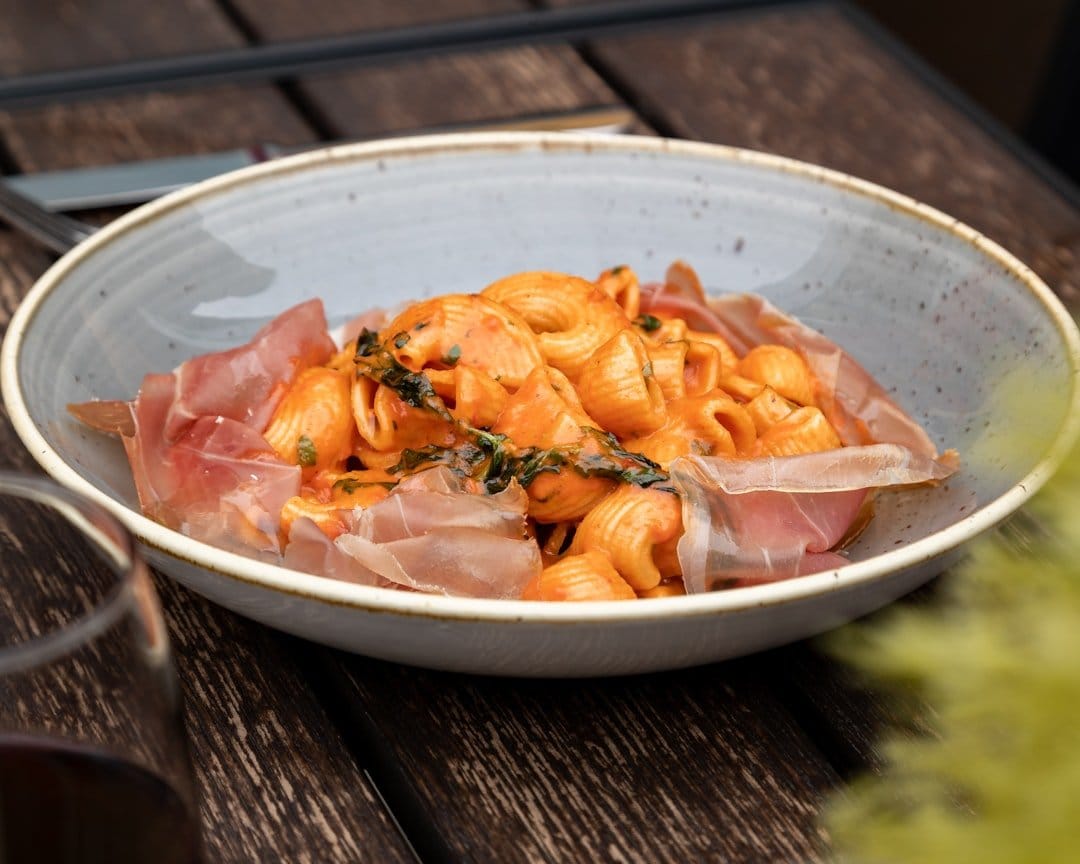
The pasta detail makes the point even better. Decanter notes that 54% of Italians eat pasta daily, citing Nextplora 2024, and that there are over 300 pasta shapes. Over 300. Which is exactly why the “one winning style” conversation around wine is so dumb. Italy does not have one pasta. It should not chase one wine profile.
Diversity is the brand.
But only if the diversity stays intelligible.
That’s why I actually loved that The Drinks Business included pizza-pairing coverage in its Italy Report. Some people will read that as fluffy lifestyle content. I read it as a correction. Good. Put wine back in contact with food normal people actually eat. Put it next to pizza, pasta, fritto misto, grilled fish, beans, anchovies, ragù — not just under museum lighting in a tasting room.
If a producer can answer one question quickly — what would you eat this with? — they’re already ahead.
If they can’t, I start to worry the wine was designed backwards.
That’s what 2026 is really forcing. Not a surrender to fashion. Not a betrayal of structure. Not a mass conversion to freshness as a religion. It’s forcing Italian wine to remember its native operating system: the table.
Tariffs made the pain louder. Oversupply made it impossible to ignore. Restaurant buyers are enforcing discipline. Consumers are acting less gullible. Tutto qui.
And here’s the uncomfortable part: if tariffs disappeared tomorrow, would Italian wine actually be healthy? Or would we just go back to hiding weak positioning behind export momentum, fancy denominations, and restaurant markups that require a small business loan?
That’s the real version of Italian wine’s 2026 identity fight after tariffs and lighter-style pressure. It’s not traditional versus modern. It’s not even heavy versus light. It’s whether Italy still believes wine is for dinner — or whether too many bottles were built to be admired, shipped, and upsold.
I think 2026 is the year that excuse stops working.
And honestly? Good. If a bottle can’t earn its seat next to pasta, maybe it never deserved the chair.
Frequently asked questions
Why is Italian wine facing an identity crisis in 2026?
Italian wine is facing an identity crisis in 2026 because tariffs, oversupply, and changing restaurant demand are exposing which wines still make sense with food, price sensitivity, and real dinner occasions. The pressure is not only economic. It is forcing producers to prove relevance at the table.
How are restaurants changing what Italian wines they buy?
Restaurants are buying smaller quantities, keeping leaner cellars, and favoring wines with clear identity, drinkability, and food versatility. Expensive prestige bottles without obvious value are becoming harder to justify, while whites, sparkling wines, and lighter reds with controlled pricing are gaining momentum.
Does this mean Italian wine has to become lighter in style?
Italian wine does not need to become uniformly lighter in style. The article argues that it needs to become more legible, meaning consumers should easily understand the region, grape, food pairing, and purpose of a wine. Clarity and table relevance matter more than chasing one fashionable profile.
Sources
- Primary trending article
- Frescobaldi: tre priorità per il vino italiano
- Primo quadrimestre dell'anno ancora negativo per l'export di vino italiano: valori a -6,8%. Aprile in lieve ripresa in Usa
- Per vendere più vino i ristoranti puntano su bianchi, bollicine e rossi più leggeri
- Ordini più piccoli e logistica su misura: così i ristoranti cambiano gli acquisti di vino
- Pasta & wine: Pairing Italy’s pastas with the perfect pour