
How F1 Telemetry Software Quietly Wins Races
Modern Formula 1 is decided as much by telemetry, predictive models, and control software as by bravery, tyre wear, or raw pace.
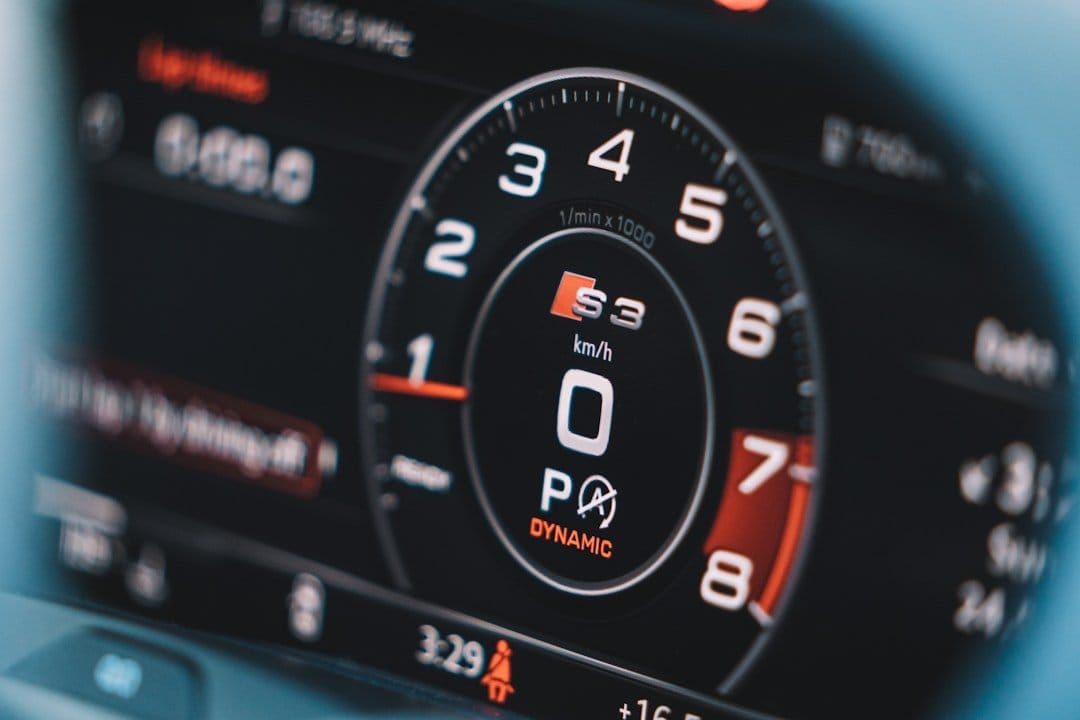
I love the romance of Formula 1. The late-braking move. The driver radio that sounds like a minor crime is about to happen into Turn 1. The whole opera of it. But if we’re being honest, a lot of races are not decided in those cinematic moments anymore. They’re decided by software.
That sounds less sexy than Senna in the rain. Mi dispiace. It’s still true.
If you want the blunt version of how Formula 1 telemetry and race strategy software decide race outcomes, here it is: the car is constantly talking, the pit wall is constantly modeling, and the teams that interpret the mess fastest usually win. Not always. But enough that pretending otherwise feels a bit cosplay at this point.
Sometimes the story isn’t “the driver got cooked.” Sometimes it’s bad calibration in a race suit.
The pit wall is not guessing
Fans still talk about strategy like there’s some grizzled engineer on the pit wall squinting at tyre wear and going, “Box this lap.” Cute. Modern F1 strategy is closer to live trading with carbon fiber attached.
Formula 1 itself basically admitted this when it launched the AWS-powered Strategy Insight graphic. The whole point, per Formula1.com, was to show fans how teams make decisions in real time using live timing, telemetry, historical race data, and predictive analysis. In other words: not vibes. Models.
And the inputs are exactly the stuff that decides races now — pit stop windows, tyre performance, Safety Car probability, rival behavior, undercut threat, whether it’s worth extending a stint, whether traffic will ruin the whole thing. That’s the real race. The cars are just the visible part.
This is why strategy calls can look stupid on TV and genius twenty laps later. The model often sees the race before the broadcast does.
I’ve built hardware-software systems most of my adult life, and this part feels very familiar. The hard problem is never just the app, or the device, or the cloud. It’s the decision-making at the seams, when the data is incomplete and the stakes are annoying. In F1, the question isn’t “what should we do?” It’s “what should we do with partial information, changing conditions, and three rivals trying to bait us into a bad call?”
That’s not motorsport mysticism. That’s operations.
So when fans think the team is reacting to the same race they’re watching, I have to laugh a little. You’re seeing a Ferrari behind a McLaren. They’re seeing tyre degradation curves, projected out-laps, traffic risk, battery state, delta loss under VSC, and whether the rival’s second stint is likely to fall off a cliff on Lap 41.
Different sport, basically.
Formula 1 telemetry isn’t just analysis — it changes the race live
This is the bit people miss. Telemetry is not just forensic. It’s not only for the post-race nerds with laser pointers and too many screenshots. It is active. It changes what happens while it’s happening.
The car is constantly feeding back temperatures, harvesting, deployment, traction behavior, power-unit state, tyre phase, all of it. That data shapes whether the driver should push, save, defend, attack, compromise one corner for the next straight, or stop pretending an overtake is even on the table.
That’s why a lot of “he just didn’t go for it” takes are nonsense.
According to Motorsport.com’s reporting on the 2026 power units, the next rules lean even harder into algorithms and self-learning control logic, with software behavior able to decide lap time and grid position through predictive energy management. Read that again. If software determines when and how energy gets used, then software is shaping the actual possibility space of racing.
Not just pace. Possibility.
Lewis Hamilton has been pretty direct about this, calling out his “real frustration” with how much software now influences competitiveness. And honestly, I get it. I’m not usually sentimental about older eras — old F1 had plenty of nonsense too — but he’s pointing at something real. If the code decides when the car can be a weapon, then the driver is partly negotiating with a hidden machine layer that most fans never see.
The Haas side made a similar point in Motorsport.com too: fans may not get a true picture of driver performance under the 2026 rules because software will have such a big role. That’s the uncomfortable part. We still rank drivers mostly by what we can see, while a huge chunk of competitiveness lives in control logic, calibration, and energy management maps.
A friend of mine said to me over aperitivo in Milan, “Yeah, but the best driver still wins.” Maybe. Sometimes. But if one car’s deployment model gives its driver attack capability in exactly the right part of the lap and the other car’s logic tells its driver to save, what exactly are we measuring? Talent? Software? Both?
It’s both. People just hate the second half of that sentence.
The most expensive mistake in F1 is blaming the wrong thing
Modern telemetry is brutally good at exposing lazy narratives.
The George Russell Mercedes situation is a perfect example. Motorsport.com reported Russell saying the data review pointed toward software calibration rather than driving technique as the cause of the team’s struggles. That matters because the default reaction from fans and media is always personal. He over-drove it. He lost confidence. He missed the setup window. He didn’t extract enough.
Sometimes, sure.
Sometimes the software is the problem and everybody spends two days yelling at the wrong human.
The follow-up reporting was even more telling: Mercedes traced Russell’s straight-line deficit to a power-unit control software issue after several days of telemetry-led investigation. Several days. Which tells you two things. First, the issue was real. Second, diagnosing modern F1 problems is now a competitive skill on its own.
If you diagnose badly, you burn the weekend.
Formula1.com quoted Russell at Silverstone saying the balance of the car felt reasonably strong and he was comfortable, but they were struggling with straight-line speed. That one quote kills half the lazy narrative machine. The visible result said one thing. The telemetry said another.
I’ve seen this dynamic a thousand times in tech. Something breaks and everyone wants a human villain because that’s emotionally satisfying. Marketing messed up. Engineering shipped garbage. Ops dropped the ball. Then you dig in and the real problem is some stupid mismatch between firmware, cloud logic, and app state sync. Not dramatic. Just expensive.
F1 is the same, except the error shows up at 300 km/h and Crofty is already turning it into mythology.
So if you’re asking how Formula 1 telemetry and race strategy software decide race outcomes, this is a huge part of the answer: they don’t just shape the call. They shape the diagnosis. And the wrong diagnosis sends teams into setup dead ends, strategy mistakes, and very confident radio messages based on fantasy.
Fantasy is expensive in Formula 1.
Overtakes are the receipt. Energy deployment is the purchase
We remember the overtake because that’s the bit with the adrenaline. Fair enough. But the thing that made it possible is usually invisible.
Passing still gets explained like it’s mostly bravery plus tyre deg. Nice for a montage. In the real sport, energy deployment is often the gatekeeper. If the release profile is wrong, if the battery state is compromised, if the software doesn’t let the car arrive with enough punch in the right zone, the move is not happening. End of story.
That’s why the Russell-Mercedes case matters beyond one bad weekend. A straight-line software issue doesn’t just make the car “a bit slower.” It changes whether you can attack, whether you can defend, whether an undercut is worth trying, whether dirty air becomes a prison sentence.
And it changes what the audience thinks they saw.
If a driver can’t close the move into Stowe or down Hangar Straight, fans say he lacked confidence or racecraft. Maybe. Or maybe the power-unit software made the move structurally unavailable. Same outcome. Completely different cause.
The 2026 rules make this even sharper. If predictive energy management and self-learning control logic can decide lap time and grid position, then software isn’t just supporting the driver’s choices. It’s defining the menu of choices the driver gets to have.
That’s a massive shift, and the sport still talks about it like it’s some nerdy footnote in the appendix.
It’s not a footnote. It’s the plot.
I’m not anti-tech, by the way. I literally build systems for a living. I’ve even worked on connected product telemetry for an espresso machine, which is an absurdly Italian sentence and yet here we are. But that work teaches you something simple: once software mediates the physical experience, the software is part of the performance. You don’t get to pretend it’s just background noise.
F1 still pretends. A little.
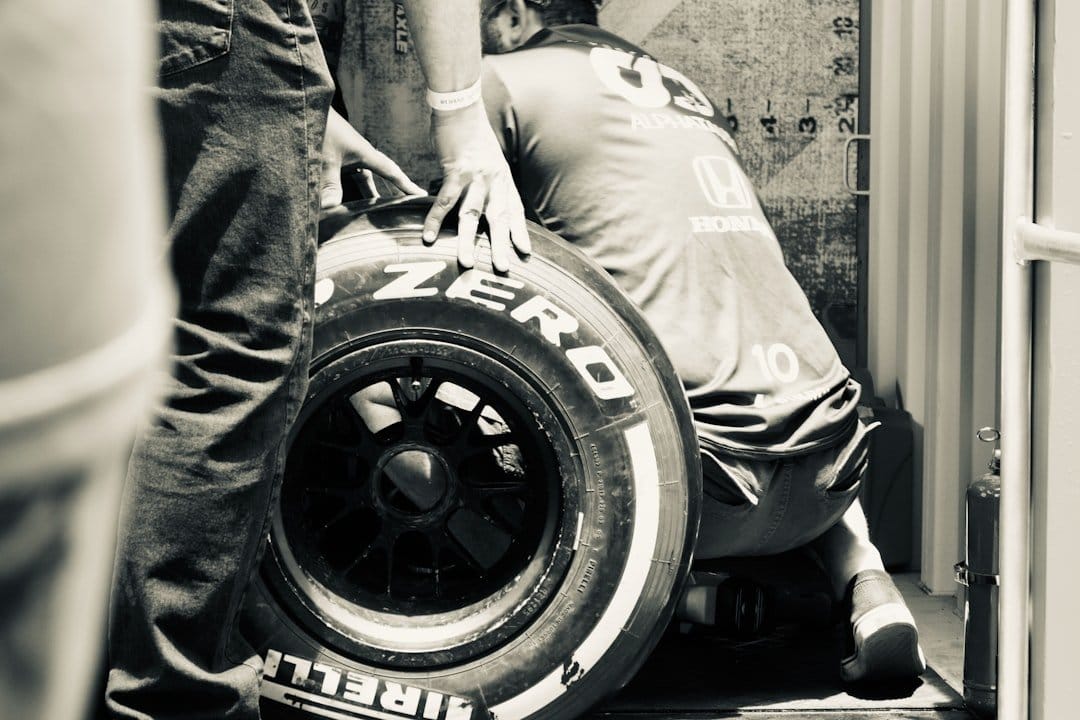
Some of the smartest race-winning decisions look boring on TV
This is another thing people struggle with: genius in modern F1 often looks underwhelming.
Take Red Bull’s tow strategy in Belgium qualifying. Formula1.com quoted Isack Hadjar saying helping Max Verstappen was “definitely the right thing to do.”
Definitely the right thing to do.
That’s not exactly gladiator poetry. But it’s a perfect example of a team using timing, track modeling, and execution discipline to create a margin that matters.
And the margin did matter. Formula1.com noted Verstappen ended up more than three tenths behind polesitter Kimi Antonelli, while that same gap covered multiple cars down the order. Three tenths is nothing if you’re late for dinner. In F1 qualifying, it’s the difference between clean air and spending Sunday staring at someone else’s diffuser.
That’s why how Formula 1 telemetry and race strategy software decide race outcomes goes way beyond pit calls on Sunday. It’s qualifying prep, tow timing, setup direction, simulation branches, and all the tiny operational choices that look boring until they cash out into track position.
Silverstone had another good example. Antonelli said Mercedes changed some settings after a Q2 lock-up, then he stuck it on pole with a 1:28.111. No one is making a Netflix trailer about “we changed some settings,” but that’s exactly how elite teams turn telemetry into results. Not with magic. With loops.
His quote about overtaking was even better. Once he caught up to Lewis Hamilton and got within “overtake mode,” he felt confident he could make the pass. There it is again. Overtake mode is not mythology. It’s system state. The move becomes available because the machine stack and race context line up.
Even Verstappen framed Belgium in team-execution terms, saying they were happy with how they executed as a team. Slightly boring quote. Completely correct quote.
My nonna would hate this version of Formula 1. She preferred the idea of heroes doing impossible things with sheer instinct, and she was suspicious of Wi‑Fi for years. I respect her deeply. She is also wrong about this one.
The driver still matters. The myth just needs updating
To be clear, I’m not saying drivers don’t matter anymore. That would be stupid. Put me in a Red Bull and I’d last maybe four corners before needing spiritual support.
The driver still has to manage tyres, place the car, make decisions under absurd pressure, adapt to conditions, and execute when the window opens. None of that disappears. What changes is the shape of the contest. The driver is now one part of a larger decision system, and pretending otherwise makes people misunderstand what they’re watching.
That’s the real tension in modern F1. We want a simple story with a hero, a mistake, a comeback, a villain, a brave overtake. Instead we get a distributed system with a steering wheel.
Honestly, I find that fascinating. I grew up in Ivrea, the town of Olivetti. Engineering culture was just kind of in the air. So maybe I’m naturally biased toward the machine side of the story. Fine. Guilty. But if F1 wants to be the most advanced systems-engineering sport on earth — and it clearly does — then we should talk about it honestly.
That’s why I actually like the AWS Strategy Insight stuff. Not because it simplifies the sport. It doesn’t. But because it exposes the computational layer that has been deciding races in plain sight for years. Telemetry, live timing, historical data, predictive analysis, Safety Car risk, tyre models, rival behavior — that’s not decoration for the broadcast. That is the sport.
And once you see that, you can’t really go back to the old fairy tale.
You stop saying “bad strategy” like it’s one dumb guy with a headset. You start asking what the model saw, what the telemetry said, what assumptions were wrong, what constraints the software imposed, what options were actually real.
That’s a much better way to watch Formula 1. More demanding, yes. Also more interesting.
Because the overtake you’re cheering for? It may have been set up ten laps earlier by battery management, tyre phase modeling, traffic prediction, and one engineer making the least-delusional decision in the room.
The move is the highlight.
The computation is the cause.
And that’s the part I think fans need to get comfortable with. Software isn’t some backstage support act in modern F1. It’s on stage now. It shapes the car’s honesty, the pit wall’s judgment, the driver’s options, and very often the result itself.
So the next time somebody tells you a race was decided by “who wanted it more,” be kind. They’re trying to enjoy the myth. I get it. I love the myth too.
But if you actually want to understand modern Formula 1, you have to watch the invisible race as well.
That’s the one that usually wins.
Frequently asked questions
How does telemetry affect Formula 1 race strategy during a race?
Telemetry affects Formula 1 race strategy by feeding teams live data on tyre behavior, temperatures, energy use, traction, and power-unit state. Engineers combine that information with predictive models to decide when to push, defend, pit, extend a stint, or avoid traffic.
Why do F1 strategy calls sometimes look wrong on TV but work later?
F1 strategy calls can look wrong on TV because teams are acting on projected tyre degradation, traffic risk, rival behavior, Safety Car probability, and out-lap modeling that the broadcast does not fully show. The pit wall is often responding to a future race state rather than the visible moment.
Can software make an F1 driver look worse than they actually are?
Software can make an F1 driver look worse by limiting straight-line speed, energy deployment, or attack capability even when the driver feels comfortable with the car. Telemetry can reveal that a performance problem came from calibration or control logic rather than driving technique.
Sources
- F1 to launch new Strategy Insight graphic powered by AWS at Hungarian Grand Prix
- Explained: Are drivers really being beaten by AI elements in F1's 2026 power units?
- George Russell: Data shows software calibration behind recent F1 struggles, not driving style
- Mercedes identifies George Russell's F1 power unit software issue
- Fans don't get a true picture of driver performance with 2026 F1 rules – but it's fixable, says Haas boss
- Lewis Hamilton calls for less software reliance in F1 as he highlights "real frustration"