
Sicily Wine Tourism Push From Rome Could Change Travel
Vinitaly put Sicily’s transport problem in the spotlight, and better roads, rail, and water systems could transform how the island is eaten and explored.
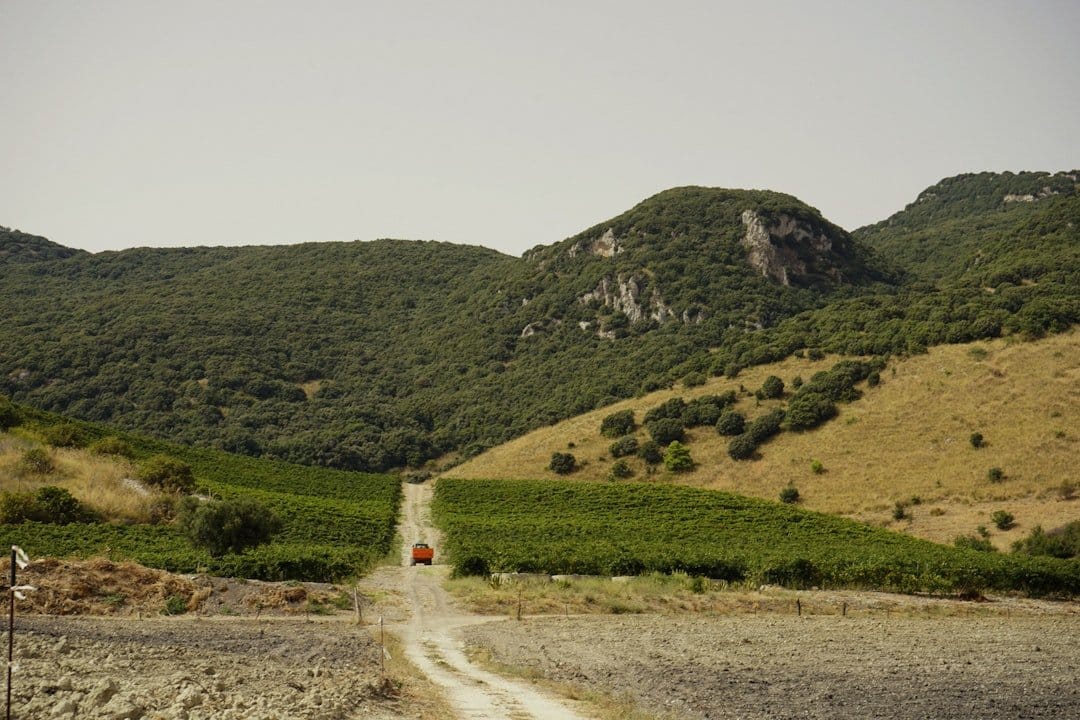
Why Sicily wine tourism gets Vinitaly-backed infrastructure push from Rome might be the most important Italian food story nobody is calling sexy enough
I’ve done the romantic Sicily thing. Properly. Long lunch under a pergola, Etna in the distance, a bottle of Grillo sweating in the heat, and some auntie-level force of nature bringing out one more plate of sardines because apparently I looked underfed.
I’ve also done the other Sicily thing: standing in a rental car lot outside Catania Airport trying to calculate whether I can make a winery tasting, a seafood lunch, and hotel check-in without turning the day into NATO logistics. That’s why when I read that Sicily wine tourism gets Vinitaly-backed infrastructure push from Rome, I actually paid attention. Not because infrastructure is hot. It is aggressively not hot. But because boring logistics are often the difference between a dream trip and a beautiful mess.
The most revealing thing said at Vinitaly this year wasn’t some poetic line about volcanic soils. It was Deputy Prime Minister Matteo Salvini saying Sicily’s wine tourism will be increasingly supported through logistics and infrastructure, with what the drinks business called his three-step recipe: “connect, make accessible, and build the future.” Yes, it sounds like a consultant got hold of a Canva template. He’s still right.
Because Sicily does not need more wine marketing. It needs fewer friction points.
Sicily wine tourism gets Vinitaly-backed infrastructure push from Rome — and that’s the whole story
Sicily has never had a desirability problem. Nobody needs convincing on the fantasy. People already want Etna, Marsala, Palermo, Taormina, the fish, the citrus, the pistachios, the whole fever dream. The problem is that wanting Sicily and moving through Sicily are two very different things.
That’s why Salvini’s Vinitaly comments matter. He framed wine tourism as an infrastructure problem instead of a branding problem. According to the drinks business, he pointed out that more than half of Sicilian wine production ends up on international tables, naming American, German, and Japanese buyers. That tells you everything. Exports and tourism are not separate stories. They feed each other.
If I drink a great bottle of Catarratto in New York, book a trip to Sicily, and then lose half a day to clunky transport, that’s not just annoying for me. The winery loses. The restaurant loses. The hotel loses. The driver, the guide, the bakery, the olive oil producer — they all lose. Hospitality is a system. Not a mood board.
Salvini also tied the promise to actual public works, saying Sicily has €28 billion in construction sites underway across roads, highways, railways, and dams. Again: not sexy. Also exactly the point. If you can get from Palermo to Catania to Messina without sacrificing your will to live, wine tourism stops being a niche sport for people who enjoy logistics as foreplay.
And then there’s water. Which is not a side issue. It’s huge. According to the drinks business, Salvini said:
On the water issue, we’ve restarted structures that have been idle for 40 years.
Forty years. That’s not rustic charm. That’s institutional sleepwalking.
Last summer in western Sicily, a producer told me over grilled prawns and a bottle of Nero d’Avola that visitors always underestimate the dead time. Not the tasting. Not lunch. The dead time between things. The waiting. The doubling back. The random inefficiency that quietly eats a day. That, more than any glossy campaign, is what Rome finally seems to be noticing.
Good. About time.
Authenticity is great. You still need a road.
I have a low tolerance for tourism copy that treats inconvenience like a moral virtue. Sicily has been sold for years as “authentic,” “raw,” “a land of contrasts,” all these phrases that are technically true and completely useless when you’re trying to get from the airport to a tasting before the kitchen closes.
Authenticity is lovely. You still need a road.
That’s why I actually like the framing from Assovini Sicilia, even if part of me wants to roll my eyes on instinct because I’m Italian and professionally allergic to polished association language. According to WineNews, the group is pushing Sicily as a high-level, sustainable alternative to mass tourism. That’s smart. Sicily should not become a conveyor belt for people collecting Aperol Spritz content and leaving with one blurry sunset reel.
But “premium” only works if the basics work. You can’t sell a refined, layered experience if basic movement feels improvised.
The best line in Assovini’s pitch came from Laurent Bernard de la Gatinais, who described wine as the “red thread” connecting Sicily’s history, architecture, food, and wine culture. That’s exactly right. Nobody flies to Sicily for one isolated swirl-and-sniff in a tasting room with beige crackers. They come for a chain reaction: winery, lunch, baroque town, beach, market, dinner, one more glass, bad decision, excellent memory.
That’s why infrastructure matters more than another campaign.
Assovini Sicilia isn’t a cute little passion project either. WineNews says it represents 100 wineries with more than €300 million in turnover, and “practically all” of them are investing in wine tourism. That’s not artisanal daydreaming. That’s an industry making a serious bet.
There’s another quote from de la Gatinais that stuck with me:
Those who come to Sicily come to discover.
Exactly. Discovery is the product. But discovery stops being romantic when every transfer requires three apps, two calls, and a small prayer to San Whoever Handles Regional Transport.
My nonna would tell me I’m being dramatic, and she’d be right, but only slightly. In Noto, I once ended up at an unplanned lunch because a winery visit ran late and someone said, “Trust me, five minutes.” It was not five minutes. It was twenty-five. The pasta was worth it. The point is not to turn Sicily into Switzerland with better cannoli. The point is to reduce the pointless chaos that keeps people from doing more.
The market is already moving. Especially on white wine.
There’s another reason this infrastructure push matters: Sicily is not asking Rome to rescue some struggling wine region. Demand is already there.
According to the Nomisma Wine Monitor report produced with UniCredit and cited by WineNews, exports of Sicilian PDO whites rose +8.9% in 2024, after already climbing +7.8% in 2023. That’s not a sleepy category. That’s momentum.
The country split is even more interesting. In 2024, Sicilian PDO white exports grew +37% in the UK, +34% in Russia, +12% in Germany, and +11% in both Canada and the USA, according to the same report. Meanwhile a lot of people still picture Sicilian wine through old clichés: rustic reds, heavy bottles, dusty cellars, someone saying “full-bodied” like it’s 2004.
Meanwhile the market is basically yelling: guys, the future is colder than that.
And honestly, good. Because the wines that make the most sense in Sicily are often the ones that fit how people actually eat there. Grillo with crudo. Catarratto with grilled swordfish. A salty white on a stupidly hot afternoon with fried anchovies and a view. This is not theory. This is lunch.
That doesn’t mean reds are done. Sicily still has Nero d’Avola and Nerello Mascalese, and when they hit, they really hit. But the trend is clear. WineNews reports Sicilian PDO reds declined for two straight years, -4.5% in 2023 and -2.9% in 2024, even though some markets still grew: Canada +22%, Russia +17%, the Netherlands +8%, and the US +6%.
So the region isn’t collapsing. It’s evolving.
Tourism should evolve with it. A lot of Sicilian food-and-wine travel is naturally built around daytime pleasures anyway: lunch by the sea, aperitivo before sunset, fish markets, beach clubs, rooftop dinners where the air is still warm at 10 p.m. White wine fits that reality better than a lot of old-school “serious wine” storytelling does.
There’s also a very obvious American angle. The Nomisma survey cited by WineNews involved nearly 2,000 wine consumers in New York, California, and Florida — the three highest-consumption states. Those are exactly the people who discover Sicily through the glass first and then start thinking, wait, maybe I should just go.
If the trip is easy, the bottle becomes a boarding pass.
Wine tourism is a €3 billion business. The good kind, too.
This isn’t just a Sicily story. Italy is finally starting to treat enotourism like a real economic engine instead of a side quest for wineries with nice patios.
According to ANSA, Tourism Minister Gianmarco Mazzi said at Vinitaly that wine tourism in Italy is worth €3 billion. He also said it can keep growing even in a downturn because, if there’s a crisis, Italy can still rely on domestic and European tourism. Which is not glamorous, but it is smart. When long-haul travel gets shaky, regional food-and-wine trips suddenly look very resilient.
Mazzi also made a point that people in hospitality already know in their bones: winery visits drive direct sales, and those sales are high value with lower costs. He called them “very pregiata.” He’s right. If I buy six bottles after a long lunch at a winery, I’m not just buying wine. I’m buying memory, story, and the deeply millennial pleasure of telling my friends I found this tiny producer before they did.
He also argued that winery visits pull people away from congested city centers, which makes enotourism one possible answer to overtourism. Again: correct. It’s one of the few travel trends that can claim cultural value without immediately sounding like a real-estate scam wearing a linen shirt.
The best line from Mazzi, though, was about word of mouth. According to ANSA, he said a winery visit creates “a passaparola… stronger than any other medium of communication.” Yes. Exactly. After all the ad tech, all the influencer sludge, all the algorithmic nonsense, the strongest marketing tool is still your friend texting you: book this place now.
That matters for Sicily more than almost anywhere else. Sicily doesn’t need to manufacture desire. It needs to convert desire into easier movement, longer stays, and more local spending. If infrastructure improves, wineries stop being isolated gems and become nodes in an actual travel network.
That’s the difference between a nice trip and a category-defining destination.
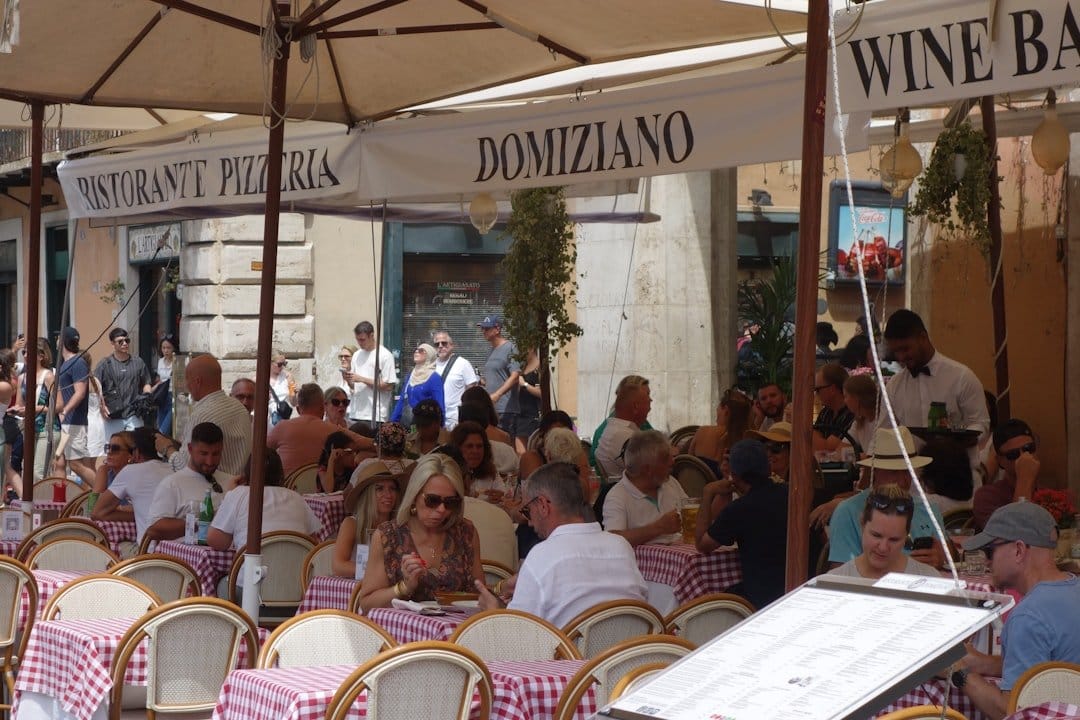
Vinitaly gets one thing right: nobody buys the wine without the pasta
One thing Vinitaly is doing well — and I say this as someone who generally distrusts trade fairs on aesthetic grounds — is admitting that wine is sold through food now. Officially. Not by accident.
According to Vinitaly’s 2026 press release, this year’s edition put Michelin-starred chefs, gourmet street food, and regional dishes at the center of the story, presenting pairings as expressions of territory and identity. Good. That’s not a sideshow. That’s the point.
At the center of it was the Ristorante d’Autore di Campagna Amica – La Casa della Cucina Italiana, created with Coldiretti, Campagna Amica, and Terranostra. The whole setup was built to make agriculture, cuisine, and territory speak to each other in one place. Which, sorry to the purists, is how normal humans actually experience wine.
You can see it in the lineup. Ciro Scamardella of Pipero on April 12. Riccardo Monco of Enoteca Pinchiorri on April 13. Then the Tortellante day supported by Massimo Bottura on April 14. Those names aren’t there for decoration. They’re there because Vinitaly understands that wine gets more compelling when it shows up next to a dish, a region, a person.
Sicily especially benefits from that framing because its wines make immediate sense with its food. You don’t need a TED Talk. Give someone panelle in Palermo, grilled octopus in Ortigia, or pasta con le sarde with a good local white and they’ll understand the island faster than they would through ten minutes of tasting-room monologue about elevation.
Coldiretti said the quiet part out loud. According to ANSA, its message at Vinitaly 2026 was:
Liberiamo il vino dalla burocrazia, dai dazi e dalle narrazioni fuorvianti.
Free wine from bureaucracy, tariffs, and misleading narratives, while supporting enotourism and promoting good Italian food.
Amen.
A lot of wine communication has become weirdly joyless, either too bureaucratic or too defensive. Food fixes that. Food reminds people that wine is not a museum object. It belongs at the table, with a little chaos, a little sauce on the shirt, and somebody insisting you try one more thing.
That’s also why I don’t buy the idea that Sicilian wine tourism should revolve around detached luxury tasting rooms with branding so polished it looks focus-grouped in Milan. Sicily is strongest when wine is part of an edible ecosystem: olive oil, almonds, pistachios, tomatoes, tuna, street food, pastry, espresso, one tiny amaro that was definitely supposed to be the last thing.
If Rome funds the connective tissue, that whole ecosystem gets easier to reach and easier to spend money in. Which is the actual goal, in case anyone forgot.
If Rome pulls this off, Sicily stops being a detour
What makes this moment interesting is that Sicily’s presence at Vinitaly looks less like a bunch of wineries doing their own thing and more like an actual regional strategy. That matters.
According to InItaly, Sicily took over Pavilion 2 at Vinitaly 2026 with a unified project linking wine, culture, and tourism. The scale alone says plenty: 164 companies involved, plus a dedicated IRVO organic section with 28 companies. That’s not a cute corner booth. That’s a statement.
There was also a B2B session on April 14 with 33 wine-tourism businesses and 23 international buyers selected by Veronafiere. Good. More of that. Less “look how beautiful Sicily is,” because yes, we know. More “here is how demand meets product in a way that can actually scale.”
The cultural packaging was sharp too. Sicily included the exhibition “Millennia of history and wine. The wine routes in the Mediterranean” with the Segesta Archaeological Park, plus the food area “La Vucciria – Sicilian Food Experience.” That’s the right move. Sell the island from the glass to the landscape to the plate. One story.
There’s also a governance piece here that people outside Italy usually ignore, but they shouldn’t. According to Italia a Tavola, Alessio Planeta was elected president of the Consorzio DOC Sicilia, following Antonio Rallo of Donnafugata. That kind of continuity matters. Planeta is not some ceremonial cut-ribbon guy. He’s a serious operator with global credibility.
And yes, the résumé is stacked. Italia a Tavola notes that Planeta was named “Winemaker of the Year” by Wine Enthusiast in 2023, and the family won “Famiglia del Vino dell’Anno” at the Meininger Awards in 2024. The Planeta brand also made The World’s Most Admired Wine Brands list. Rankings are a little silly, sure. They still signal something useful: Sicily has leadership that can speak internationally without losing the local plot.
That’s why this timing matters. Sicily wine tourism gets Vinitaly-backed infrastructure push from Rome at the exact moment the island seems more coordinated than it has in years. Better roads without serious operators won’t solve everything. Serious operators without better roads won’t either. You need both. Very basic. Somehow still revolutionary in Italy.
I’ll say one semi-heretical thing: even the endlessly debated Messina bridge matters less to me as symbolism than as a proxy for seriousness. I don’t need every mega-project to become a nationalist fever dream. I just need evidence that somebody in Rome understands that rail links, roads, water systems, and freight efficiency shape the quality of a wine trip as much as any sommelier does.
If that ease actually arrives, Sicily changes category.
It stops being the place people say they really should do properly one day and becomes the trip they book first. Not because the island changed its soul, but because it finally reduced the effort required to experience it. Good infrastructure doesn’t make a place less authentic. It makes more of the place available.
My bet is simple: if Sicily becomes easier to move through, it won’t just sell more wine. It will quietly embarrass a lot of more famous food destinations with better PR and less soul.
The ingredients are already ridiculous. Etna, Menfi, Vittoria, Noto, Marsala, Pantelleria. Fish that tastes like the sea still has a crush on it. Whites people actually want to drink. Producers who understand hospitality. A food culture that does not need styling help from anyone.
The only question is whether Italy can do the least glamorous thing imaginable and make the island function well enough that lunch, wine, landscape, and culture stop feeling like separate wins.
If that happens, Sicily won’t need better storytelling.
It’ll need a reservation system that can survive the stampede.
Sources
- Primary trending article
- The Sicily of wine focuses on high-end wine tourism, in the name of authenticity and discovery
- Sicily’s wine appeal is growing, especially its excellent white wines
- Mazzi, enoturismo in Italia vale tre miliardi di euro e può crescere
- Vinitaly: Coldiretti, 'liberiamo il vino dalla burocrazia'
- Vinitaly 2026: in Verona, wine meets great Italian cuisine