
Running local LLMs on your own hardware in 2026? Stop
Most self-hosted AI setups are expensive cosplay. The real winners use local models for control, governance, and boring daily reliability.
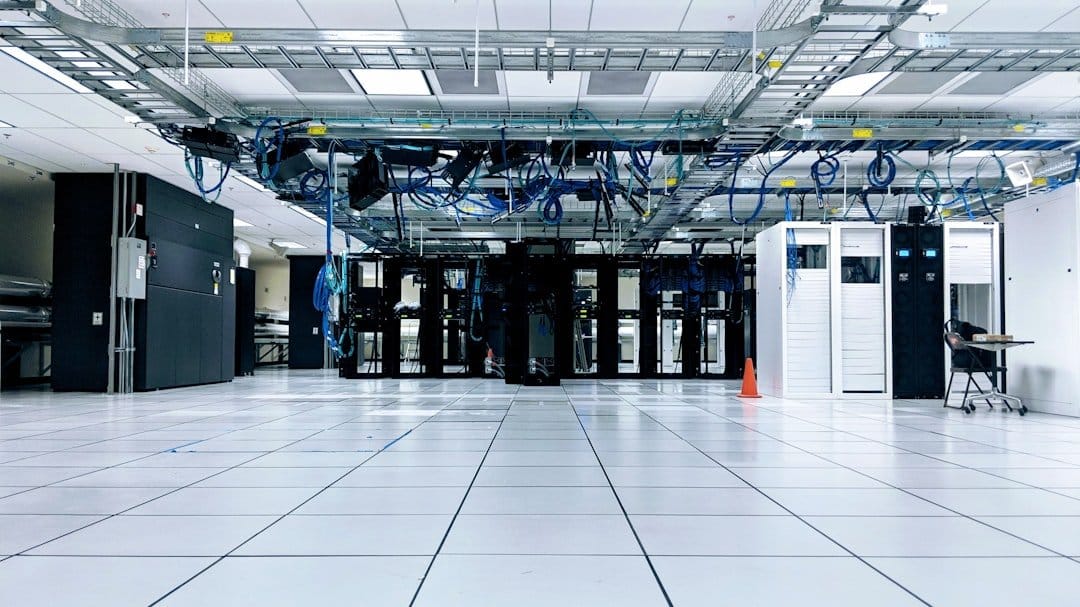
I keep seeing people brag about running local LLMs on your own hardware in 2026, then you look at the setup and it’s a hostage situation between VRAM, quantization, and emotional denial. The machine costs as much as a used Fiat 500 in Torino. The latency chart looks like a cardiogram. The model is “working” the way a folding chair is “ergonomic.”
Meanwhile, the people getting actual leverage from local models are weirdly quiet. They use owned hardware to keep code, contracts, customer data, and agent workflows inside a box they control. They care about permissions, uptime, cost curves, and whether the thing survives a Tuesday with five people hammering it at once. They are not posting glamour shots of RGB fans like they’ve opened a nightclub in Bushwick.
I’m very pro self-hosting. I run my own Docker stack on Linux for this blog, analytics, automation, mail, ERP, and an AI image-generation UI I built in SvelteKit. I’ve spent 20 years shipping systems where hardware, software, and cloud fail exactly at the seams, from ALYT in the US smart-home market to a connected espresso machine for Pascucci, because apparently I enjoy my infrastructure with caffè and pain. So when I say most local-AI discourse is vibes over outcomes, I’m saying it as someone who has personally donated weekends to dependency hell and still paid the invoice.
consumer hardware hits the wall fast
“Runs on consumer hardware” is one of the most abused phrases in AI marketing. It’s technically true in the way a sofa bed is technically a bed. Fine for a night. Bad basis for life decisions.
Juan J. Colmenares put it more honestly than most in a Hugging Face post on July 13, 2026 about deploying GLM-5.2-FP8. He wrote, “Top performant AI models usually mean heavy hardware requirements,” and for local inference this “is still a massive entry barrier.”
His numbers are ugly. To run GLM-5.2-FP8 with a 131k token context, the estimate is around 940 GB of VRAM, according to the Hugging Face deployment write-up. The demo machine was a Dell PowerEdge XE9680 with 8x NVIDIA H200s. Each H200 has about 144 GB of VRAM. Great box. Also nowhere near what people mean when they say “I’m running it locally” from a one-bedroom apartment in Austin, Berlin, or Milano.
Colmenares also notes that unsloth/Kimi-K2.7-Code-GGUF still needs 304 GB even in the smallest 1-bit GGUF quantization. Three hundred and four gigabytes. For the tiny version. At that point you’re not buying a hobby machine. You’re drafting an energy policy and probably annoying your landlord.
The Register’s July 6, 2026 review of AMD’s Ryzen AI Halo says it starts at “a hair under $4,000” for 128 GB of unified memory. NVIDIA DGX Spark is $4,699 MSRP. Tobias Mann called both an “AI lab in a box.” Fair description. Also useful, because “consumer-accessible” and “cheap” are two different conversations unless your family owns a chip fab.
The memory math matters more than the screenshots. The Register gives the rule of thumb people should memorize before buying anything: at 16-bit, you need about 2 GB per 1 billion parameters. At 8-bit, about 1 GB per 1B. At 4-bit, around 512 MB per 1B. That’s the conversation. Not the guy on X claiming his 70B model “flies” because he forgot to mention the prompt was six words long and the reply was shorter than an espresso order.
Bandwidth matters too, after the model fits. The RTX 5090 can push roughly 1.7 TB/s of bandwidth, according to The Register. Nice number. If your model spills past its 32 GB VRAM, that bandwidth mostly helps you discover disappointment faster.
A founder friend asked me in Los Angeles last month if a compact workstation could “run the big one.” That question ruins more budgets than bad hiring. The useful question is whether the box can run your workflow every day: your repo, your docs, your security constraints, your budget, and your tolerance for weird runtime bugs on a Wednesday afternoon when everyone suddenly needs the thing at once.
Booting a giant model once for a screenshot is easy. Owning a system is where the romance dies.
teams buy local boxes for control
There is a sane case for self-hosting in 2026. Teams buy local hardware for control, and the people saying this most clearly are the ones shipping the stack.
Colmenares says it plainly in that same Hugging Face post: for “the average user (myself included), owning the hardware required to run these large frontier open models is not feasible.” Then he gets to the part that matters. For small teams or labs willing to deal with some infra friction, local setup gives “full control of your data, models and tokens” and enough capacity to serve multiple users. That’s the pitch. Privacy boundary. Cost control. Predictable access.
NVIDIA is making the same case from the agent side. In its Computex 2026 piece on DGX Spark and NemoClaw, the company says local autonomous agents matter because they maintain large context windows, spawn concurrent subagents, and work without cloud dependency. It also says owned hardware lets developers keep sensitive context on-device and remove per-token costs. If you’re building something that runs all day, per-token billing starts to feel like one of those tiny subscription charges that somehow ends in a divorce.
This is where local AI starts looking like infrastructure. NVIDIA’s OpenShell is a secure, sandboxed execution environment with access controls and privacy protections. On Windows, Microsoft announced Microsoft eXecution Containers, or MXC, at Build 2026. NVIDIA’s June 2, 2026 post says MXC is the policy layer that lets agents execute code and operate on files with isolation and containment.
Good. Because permissions are always where things go feral.
I learned that the hard way on home automation work like Life Control for Megafon and EON for Germany’s largest energy provider. The dangerous part arrives around month six, when edge cases show up like uninvited cousins at Ferragosto and suddenly your “smart” system is touching things it absolutely should not touch. Agents are the same story with nicer branding.
NVIDIA’s NemoClaw Applications examples are refreshingly practical. A Software Development Agent can read a local project directory, build a plan, write and review code, with no outbound network beyond local inference. A Deck and Document Reviewer can red-team a file and return a severity-ranked punch list before it goes out. That is boring usefulness. Which is usually where the money is.
I care less whether your machine can load a 70B model than whether your agent can inspect a real contract folder, review a repo, leave an audit trail legal can understand, and avoid emailing the wrong file to the wrong person because someone got cute with permissions.
the bottleneck moved to the plumbing
Model quality improved enough that weights are no longer the whole product. The wins and losses now hide in setup, orchestration, scheduling, permissions, model routing, context handling, and all the boring machinery nobody puts on the keynote slide.
That’s why Ollama matters. In its July 9, 2026 update, Ollama said it is serving 8.9 million developers and has raised $88 million from Benchmark, Theory Ventures, 8VC, and Y Combinator. Maybe that number is inflated. Maybe not. Either way, millions of people do not show up for elegant YAML.
The best Ollama release this year might be ollama launch, announced on January 23, 2026. One command to set up coding tools like Claude Code, OpenCode, and Codex with local or cloud models, with “No environment variables or config files needed.” That line made me happier than any benchmark chart. I’ve lost enough afternoons to env-var archaeology to know exactly what a broken Tuesday costs.
A week earlier, on January 16, 2026, Ollama added Anthropic Messages API compatibility. That means tools like Claude Code can work with open models through interfaces developers already know. This matters because the practical unit of design now is the model, the harness, the runtime, and whatever cursed permissions setup your team invented six months ago after one rushed internal demo.
Hugging Face says this directly: “To add agentic behavior on top of a model (tool usage, MCP servers, session management, etc.) we have to connect it to a harness.” Yes. Exactly. Colmenares names Claude Code, Codex, OpenCode, and Pi. For his GLM-5.2-FP8 demo, he used OpenCode plus the Hugging Face MCP Server.
Harness fit changes outcomes a lot more than people admit. Colmenares notes that Qwen models are optimized for Qwen-Code. Most open-weight models can be forced across different tools. So can I cut bread with a hotel key. You’ll get a result. You won’t enjoy it.
This part of the stack finally feels like dev tooling again. That’s progress. It also means the winners are the people who care about scheduler behavior, context persistence, file permissions, and keeping five moving parts from kicking each other in the shins at 11:40 p.m. when someone says “quick fix” and everybody lies to themselves.
speed depends on software more than people admit
People still talk about local LLM performance as if the answer is always “buy more GPU.” Sometimes, sure. A lot of the time, the software stack is doing the heavier lift.
Ollama’s Apple Silicon work is a good example. In its June 29, 2026 post, the company said Gemma 4 running through MLX with multi-token prediction is up to 90% faster for coding agents on the Aider polyglot benchmark. Ninety percent is the gap between “interesting demo” and “I’ll actually use this every day.”
On June 11, Ollama said its updated MLX engine is up to 20% faster, uses less memory, and produces higher quality outputs. The same post says NVFP4 on Gemma 4 12B roughly halves the quality loss compared with common q4_K_M, relative to BF16. That’s real engineering. No jazz hands required.
I was wrong about one thing here. I thought Apple Silicon local inference would stay a nice developer convenience and never become a serious daily environment for agent workflows. Then I watched a MacBook Pro M5 Max run a coding agent with thinking and multiple subagents through Ollama’s improved MLX stack, and I had to eat my words like stale grissini. Unified memory plus competent runtime work changed the practical envelope.
NVIDIA explains the tradeoffs better than most benchmark-thread philosophers. In its model co-design piece, the company says AI deployment balances accuracy, throughput, and interactivity, and throughput and interactivity sit on a Pareto frontier. You don’t get both maxed for free. That sentence should be printed on every local AI workstation sold this year.
The same NVIDIA post drags the conversation back to physics. Amdahl’s law still applies. It gives the example that if attention is 77% of runtime, optimizing the feed-forward layers barely moves the needle. For latency-sensitive decoding, systems are often memory-bound, not compute-bound. Reducing memory access time matters more than chasing raw FLOPS on a spec sheet. That’s why people spend five grand on hardware and still end up with sluggish day-to-day responsiveness. They bought the wrong bottleneck and then blamed the model.
Ollama’s work on prefix caching and its snapshot system is exactly the sort of thing users feel immediately. The June 11 post explains that agent workloads keep resending giant transcripts, tool definitions, and file contents. Ollama now saves model state at branch points, through long prompts, and right before responses, so repeated context does not get reprocessed from scratch every time.
That’s infra work. It’s also the difference between a tool you tolerate and a tool you keep open all day.
Buying a bigger box without understanding your runtime is like buying a Ferrari to sit in Manhattan traffic. Bellissima. Useless.
hybrid wins because spreadsheets exist
The smartest operators I know are not doctrinaire about self-hosting AI in 2026. They keep the parts local that need control and offload the parts that need scale. Simple.
Hugging Face says that for many frontier open models, cloud compute or serverless providers are the only realistic option for average users. That’s arithmetic. People get weirdly emotional about “all local,” then spend six months defending a terrible setup because they already bought the GPUs and now need the purchase to become a philosophy.
The tooling market moved on a while ago. Ollama introduced cloud models in preview on September 19, 2025, specifically so users could keep local tools while running larger models that “wouldn’t fit on a personal computer.” That is the right compromise for a lot of teams. Keep the interface. Keep the local workflow. Burst outward when the job needs more memory or better economics.
Stanford Hazy Research had the same instinct early. Ollama’s February 25, 2025 post on Minions cites Avanika Narayan, Dan Biderman, Sabri Eyuboglu, Avner May, Scott Linderman, James Zou, and the Christopher Ré lab. Their idea is straightforward: pair small on-device models with larger cloud models so consumer devices handle a substantial part of the workload and the cloud takes the heavy lift.
That architecture makes sense to me because I’ve built versions of this split for years in other stacks. On Finanly.ai and Organiko.ai, the question is where control buys enough value to justify the operational burden. Sensitive context, file access, and always-on local agents stay on owned hardware. Giant one-off reasoning jobs, oversized context windows, and bursty tasks can go elsewhere if the spreadsheet says yes.
Serious local operators are also scaling locally in ways hobby discourse barely touches. NVIDIA’s June 2, 2026 Windows post says llama.cpp tensor parallelism now gives up to about 2x memory capacity and up to 1.8x compute performance across two GPUs. That matters because multi-GPU local inference is finally leaving the “forum goblins arguing at 2 a.m.” phase. LM Studio exposes some of those improvements more broadly too.
NVIDIA’s DGX Spark stack has also added a guided multi-node cluster setup for teams that need more memory or throughput than a single box, according to its Computex 2026 article. That’s when local starts looking like actual infrastructure: cluster assistants, orchestration, validated installs, buyers who know what problem they’re solving before they order hardware, and then spend August pretending the rack in the spare room was always part of the plan.
Purity politics around local AI are mostly a luxury belief for people who don’t ship.
governance will become the status symbol
By 2027, saying you run local models will sound a lot like saying you built your own NAS in 2018. Respectable. Slightly nerdy. No longer impressive on its own.
People will ask whether your agents have boundaries anyone trusts.
Microsoft’s MXC and NVIDIA’s OpenShell point straight at that future. NVIDIA’s June 2, 2026 post says OpenShell on Windows adds policy creation and management, inference routing, and PII obfuscation on top of MXC-backed isolation. Those are the features that decide whether an agent gets to touch real files or stays trapped in demo-land forever.
NVIDIA also says DGX Spark can get users from unboxing to running local AI agents “in minutes”, excluding model download. Nice. More interesting in the same Computex article is the packaging: NemoClaw bundles open models, an agent harness, and the OpenShell runtime into one install. That kind of packaging saves teams from an entire day of CUDA, ROCm, containers, Python version roulette, and PyTorch nonsense. Tobias Mann made the same point in The Register when he described AI Halo and DGX Spark as “AI lab in a box” products built around validated hardware, pre-installed dependencies, and documented playbooks.
I care because I’ve lived the opposite. My self-hosted stack works because I treat it like infrastructure, not personality. Reverse proxy. SSL. Automation. Monitoring. Search Console reconciliation because analytics traffic is mostly bot soup. When something breaks, I don’t care whether the setup looked cool on day one. I care whether the system is predictable on day 200, when the novelty is gone and the invoices still arrive right on time like an Italian aunt asking why you’re still not married.
Here’s my bet: by the end of 2027, the companies getting the most value from running local LLMs on your own hardware in 2026 will be the ones with the cleanest policies, the least stupid runtime setup, and a CFO who can read the bill without needing a drink first. The flex won’t be the GPU photo. The flex will be letting agents touch production files on purpose, with logs, guardrails, and zero drama. That’s when local AI graduates from cosplay to infrastructure.
Frequently asked questions
Why are most people running local LLMs on their own hardware in 2026 doing it wrong?
Most people focus on screenshots, giant models, and expensive hardware instead of daily workflow reliability. The article argues that local AI only becomes valuable when it delivers control, governance, predictable costs, and systems that can handle real team usage without falling apart.
What is the real reason teams buy local AI hardware in 2026?
Teams buy local AI hardware for control over data, models, tokens, permissions, and uptime. The practical value comes from keeping sensitive workflows on owned infrastructure, serving multiple users predictably, and avoiding cloud dependency or uncontrolled per-token costs in always-on agent systems.
Is a fully local setup the best option for running local LLMs on your own hardware in 2026?
A fully local setup is not always the best option because many frontier open models still require too much memory for average users. The article supports a hybrid approach where sensitive context and local workflows stay on owned hardware while larger or bursty jobs move to cloud infrastructure.
Sources
- Deploy GLM-5.2-FP8 as your open, frontier-level agent
- AI Model Co-Design: Hardware-Friendly LLM Design
- AMD’s Ryzen AI Halo makes local AI look easy, but at $4K, easy doesn't come cheap
- Ollama: all aboard open models
- Ollama's highest performance on Apple Silicon yet with MLX
- Run Local AI Agents with Faster Models and Multi-Node Clustering on NVIDIA DGX Spark