
Interesting Trends: Europe’s AI Power Shift
Europe’s AI future is no longer just about regulation. Energy, infrastructure, and hard power are becoming the real battleground.
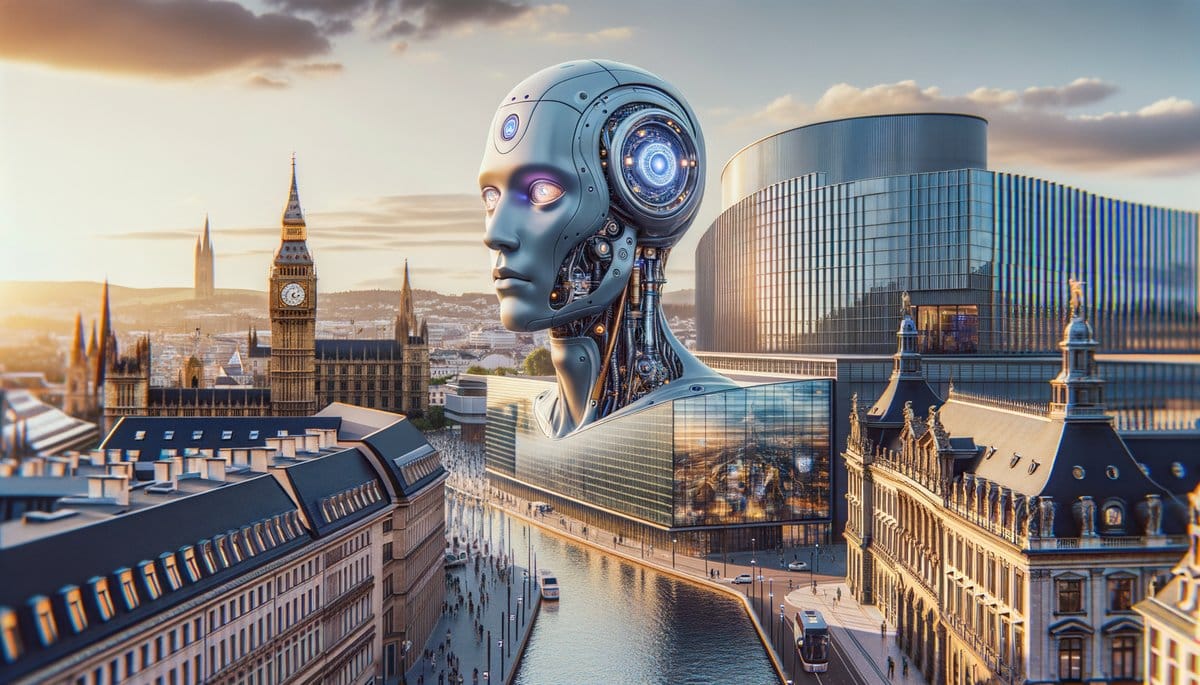
One of the most interesting trends in Europe right now has little to do with another AI panel or another round of debate over the AI Act. The real shift is that AI is no longer a neat digital-policy topic. It is becoming energy policy, foreign policy, industrial policy, and defense policy all at once.
A few weeks ago in Brussels, over a coffee priced like pre-seed equity, I caught myself saying something I did not expect to say out loud: Europe does not really have an AI problem. It has a power problem. I am pro-regulation. Very. I like rights. I like privacy. I like not handing civilization over to every Californian founder with a Substack and a messiah complex. But rights without capacity are just beautifully formatted PDFs.
And I say that as someone who genuinely wants a stronger EU. Not a looser one. Not America but with better trains and worse bagels. Dio mio, absolutely not. I mean a Europe that stops pretending model policy lives in a cute little silo while compute depends on chips, chips depend on supply chains, data centers depend on electricity, and electricity depends on whether the Strait of Hormuz wakes up angry.
Interesting trends in Europe’s AI policy shift
For years, Europe treated AI like a niche file for the same people who handle platform rules, privacy notices, and hotel-basement panels with bad microphones. That era is ending. Finally.
Because AI is not a niche. It is the stack.
If you are building anything serious, you feel this immediately. Your model roadmap is tied to cloud access. Your cloud access is tied to data-center buildout. That buildout is tied to power prices, grid capacity, cooling, permits, and geopolitical stability. Suddenly the digital economy starts looking a lot like old-school hard power with better branding.
The European Council on Foreign Relations made this point from the energy side in its paper on Gulf shocks: Europe’s biggest risk from conflict involving Iran is not just direct supply exposure. It is the indirect hit, tighter fuel markets, higher prices, and renewed Russian leverage. Sounds like energy policy. Sure. It is also AI policy now, whether Brussels likes that or not.
Because if I am running an AI company, I do not experience indirect shocks as a nice macro phrase in a PDF. I experience them as higher infrastructure costs, investors getting twitchy, slower planning cycles, and one more reason scaling in Europe feels like trying to sprint through Venezia during acqua alta.
That is the actual interesting trend here. Not regulatory refinement. Strategic awakening. A little late, yes. Very Brussels to arrive after the fight has started, shirt perfectly ironed, asking if anyone has seen the agenda. But late is still better than asleep.
No, your AI strategy is not separate from your energy bill
I have built products where infrastructure quietly ate the margin while everyone wanted to talk about narrative, community, and brand. Cute. Compute is not vibes.
It is power contracts, cooling, latency, procurement, capex, opex, and whether the monthly bill makes your finance lead stare into the middle distance like they have seen God.
That is why I get a little feral when people talk about scaling AI in Europe without talking about electricity prices, grid resilience, and energy security. AI just made energy sexy because now every megawatt has a chatbot attached to it and suddenly VCs care. Same wires. New hype.
The ECFR argument on Gulf shocks is pretty straightforward: protect shipping lanes, use strategic reserves if needed, diversify away from both Middle Eastern disruption and Russian leverage. Fine. Good. Sensible. But let us stop pretending those are only energy-security moves. They are preconditions for AI competitiveness.
If Europe wants sovereign AI capacity, it needs abundant, affordable, resilient power. Full stop.
Not 27 member states each inventing their own national AI-energy vision and then meeting in Brussels to compare PowerPoints. I mean real EU-level industrial planning. More interconnection. Faster grid upgrades. Smarter power-market reform. Serious support for data-center capacity where it actually makes strategic sense. Otherwise we keep doing the European thing where we publish elegant strategy decks while AWS, Microsoft, and Google quietly own the terrain underneath us.
And the numbers are not subtle. The IEA said in 2024 that electricity demand from data centres, AI, and crypto could more than double globally by 2026 to around 1,000 terawatt-hours, basically Japan. Goldman Sachs estimated global data-center power demand could rise 160% by 2030. You do not need to be Mario Draghi to understand the punchline: if energy is expensive, unstable, or geopolitically exposed, your AI strategy is a mood board.
My nonna would be horrified to hear me say this, but right now the grid people are the cool people.

The American umbrella is getting holes in it
I am pro-transatlantic. Obviously. I live with one foot in Europe and one in the US, and I have zero patience for fake anti-Americanism from people who spend all day on iPhones, Google Docs, Stripe, and Netflix. But being pro-alliance is not the same thing as assuming Washington will always provide the stable backdrop Europe needs to build long-term AI capacity.
That assumption looks shakier by the year.
ECFR’s piece on Trump and Iran makes the argument pretty bluntly: conflict driven by Washington’s choices can damage European security and economic interests, and too many European governments respond passively because they are still thinking in old alliance habits. Strip away the foreign-policy jargon and the point is simple. If the geopolitical environment can get jerked around by decisions made elsewhere, every long-duration bet in Europe gets more expensive.
Founders notice that. Investors definitely notice that. Anyone trying to build infrastructure notices it first.
This is why strategic autonomy stopped sounding like a French slogan and started sounding like basic adult behavior. Macron said at the Sorbonne in April 2024,
Our Europe today is mortal. It can die.
Very French line. Maximum drama. Also not wrong. He was talking about defense, industry, technology, and competitiveness as one linked problem, which is exactly the right frame.
Draghi hit a similar nerve in his 2024 competitiveness report when he argued Europe has to act as if it were one state in key strategic areas. That line sticks because it cuts through all the Brussels poetry. One market. One scale. One strategic posture. Or we lose to countries that can actually execute.
Being pro-European does not mean anti-American. It means Europe should stop outsourcing its adulthood.
China, Russia, and the end of Europe’s innocence
Europe spent a long time believing that more trade meant more peace, more interdependence meant more stability, and everyone would eventually calm down and act normal. Bellissima theory. Reality had other plans.
Russia shattered that fantasy. China’s support for Russia should bury it.
ECFR’s paper on China and Russia makes the point clearly: this is not some distant geopolitical subplot for people in think-tank blazers. It directly affects European security because it helps sustain a war on Europe’s border. And once you accept that, it gets harder to keep talking about tech dependencies like they are just procurement preferences.
They are not preferences. They are leverage points.
That matters for AI because Europe still has this annoying habit of treating strategic dependencies as if they are just market outcomes we should politely accept. But if dependencies can be weaponized, then de-risking is not protectionism in the stupid nostalgic sense. It is statecraft. Basic, boring, necessary statecraft.
Von der Leyen’s de-risk, not decouple line gets repeated so often it is basically Brussels wallpaper now, but it still holds up. Europe should stay open. It should stay competitive. I am a founder, not a bunker guy. But openness without risk management is just vulnerability dressed up as sophistication.
You can already see the harder edge showing up:
- Export controls
- Investment screening
- Cloud sovereignty debates
- Trusted-vendor fights
- Industrial alliances
Good. More of that. The market needs security to function. That is not anti-market. That is what you say after reality has punched you in the face a few times.
I will admit something here that I used to resist. For a while, I wanted Europe’s AI story to be mostly about values. Human-centric tech. Rights. Dignity. Standards. I still believe in all of that. Deeply. But the older I get, and the more founders and operators I talk to, the more obvious it becomes that values without hard capacity are fragile. I wanted Europe to win by being morally right. Turns out we also need energy, chips, capital, and leverage. Annoying. True.
Europe does not need another AI panel. It needs muscle.
If you want one of the most interesting trends to watch, it is this: Europe is slowly, awkwardly, finally moving from rule-making to capacity-building.
That is the future.
Not another conference on trustworthy AI where everyone nods gravely, says ecosystem twelve times, and then goes back to renting infrastructure from someone else.
Europe needs coordinated action across energy, compute, cloud, semiconductors, defense-tech crossover, capital markets, and procurement. Not 27 mini-strategies doing interpretive dance. Fragmentation is a tax on ambition, and Europe has been paying it for so long some people think it is just the natural order of things.
Letta wrote in his 2024 single-market report that Europe has to think and act big, fast and as one. Exactly. The single market is not a museum piece. It is the platform. Use it.
And procurement matters way more than people admit. If Europe wants AI champions, it should buy from them. Fund them. Give them room to scale. The US did not build technological power by crossing its fingers and hoping the market would spontaneously generate strategic capacity while the state sat in the corner eating almonds. Europe does not need to copy America beat for beat, but we do need to stop acting surprised that coordinated power works.
This is where all the threads come together:
- Energy shocks can destabilize Europe
- Passive alignment with Washington can hurt European interests
- China’s support for Russia changes Europe’s security environment
Put that together and the message is almost rude in its clarity: Europe’s AI future is being shaped by hard power whether Brussels finds that vulgar or not.
So yes, keep refining the rules. I am glad we have them. Truly. But the real question is whether Europe can pair those rules with enough energy, infrastructure, capital, and geopolitical backbone to matter.
Europe has already proven it can regulate the future elegantly. Cute.
Now it has to prove it can build it.
Because if this interesting trend keeps accelerating, and I think it will, the next version of Europe will not be the world’s smartest referee. It will either become a serious builder with actual muscle, or it will spend the next decade explaining the rules of a game other people own.