
Fluidstack Funding and Valuation - Founders, Stakes
Fluidstack’s latest fundraising talks show how scarce compute, not software alone, is becoming the real gatekeeper of the AI economy.
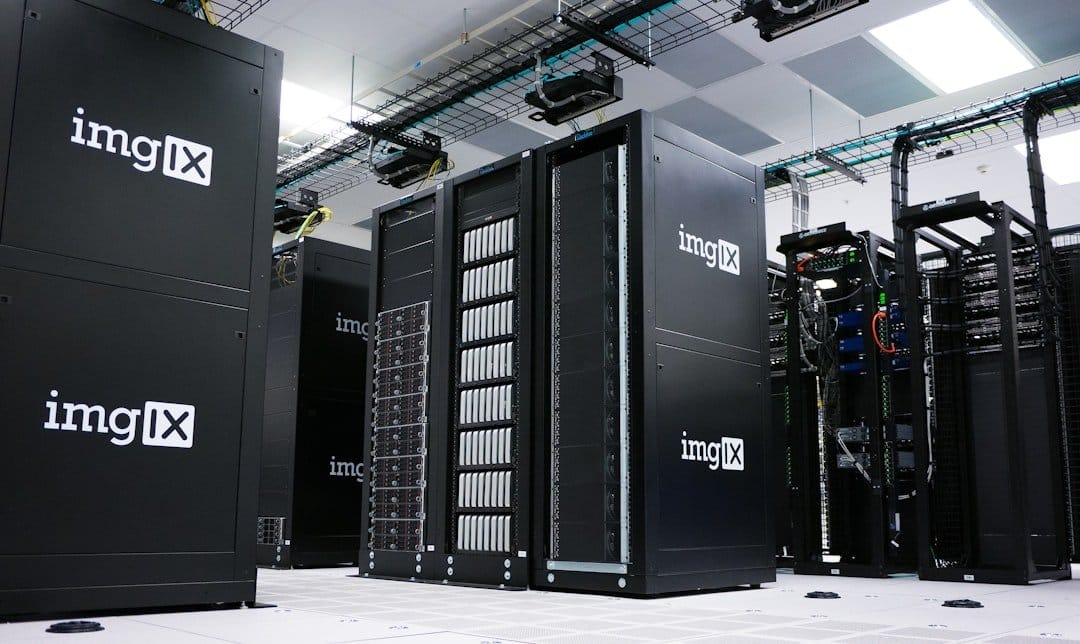
Fluidstack seeks $1 billion at an $18 billion valuation, and that headline says more about the AI economy than it does about one startup. What looks like a flashy fundraising round is really a story about scarcity, leverage, and who controls access when everyone wants the same finite resource: compute.
If this had surfaced two years ago, it would have sounded like peak hype. Another AI-adjacent company, another giant number, another deck full of gradients and infrastructure jargon. But this one feels different because the bottleneck has moved down the stack. In AI, software is abundant. Compute is not.
From that angle, Fluidstack looks less like a typical cloud company and more like a gatekeeper. It is not selling magic. It is selling entry.
What are Fluidstack’s funding, valuation, founders, and distributed GPU cloud story?
Fluidstack is a distributed GPU cloud company now reportedly in talks to raise $1 billion at an $18 billion valuation. It was founded by Cesar Maklary and Laurent Bentata. The short version is simple: investors are valuing Fluidstack like strategic infrastructure because it helps large AI customers secure scarce compute capacity.
That combination is what makes the company show up in so many searches right now. People are not just asking whether the number is real. They are asking what Fluidstack actually is, who started it, and why a distributed GPU cloud can suddenly command software-like pricing.
The answer is that Fluidstack sits in the part of the AI stack where demand collides with physical limits. Chips, power, racks, financing, and long-term contracts are all harder to scale than model demos. When a company can aggregate and deliver that capacity, it starts to look less like a reseller and more like critical infrastructure.
Fluidstack seeks $1 billion at an $18 billion valuation because compute is scarce
The headline matters, but the reason behind it matters more. Fluidstack seeks $1 billion at an $18 billion valuation because investors increasingly believe the real AI constraint is capacity. The question is no longer just who can build models, but who can secure chips, racks, power, space, and financing before rivals do.
According to Bloomberg Law, Fluidstack is in talks to raise about $1 billion at a target $18 billion valuation, with Jane Street and Situational Awareness in talks to co-lead, while Morgan Stanley is advising.
That investor mix stands out. Jane Street is not known for chasing soft narratives or app-layer excitement. When firms like that appear in a round, it suggests the thesis is grounded in hard economics rather than momentum alone.
TechCrunch, citing Bloomberg’s reporting, noted that Fluidstack was around the $7.5 billion level in December 2025. If the new round closes near the reported target, that would represent a sharp re-rating in just a few months. The market is effectively pricing compute access as a strategic asset.
That is the key shift. Software became abundant. Compute did not.
Investors often talk about backing the picks and shovels of a new boom, but infrastructure usually loses some of its appeal once capex, debt, and construction timelines enter the conversation. AI has changed that. Demand is high enough that even intermediaries now look essential.
If software is infinite but compute is scarce, the company controlling the queue starts to look like the product.
Who founded Fluidstack?
Fluidstack was founded by Cesar Maklary and Laurent Bentata. That matters because this is not being valued like a consumer startup built on taste or distribution alone. It is being valued like a company that figured out how to assemble fragmented compute supply into something large customers can actually use.
In other words, the founders are attached to a business model that benefits from operational complexity. The more difficult it is to secure GPU capacity at scale, the more valuable that coordination layer becomes.
What does “distributed GPU cloud” actually mean here?
In plain English, a distributed GPU cloud is a way to aggregate GPU capacity across different suppliers, locations, and infrastructure arrangements rather than relying only on one giant centralized cloud footprint. That does not make the business simple. It makes orchestration the product.
For customers, the appeal is straightforward: more paths to scarce compute, more flexibility, and potentially faster access than waiting in someone else’s queue. In a tight market, that alone can be worth a great deal.
Anthropic’s deal turned Fluidstack into critical AI infrastructure
The strongest signal that this is more than fundraising theater came from a major customer making a major commitment.
In November, Anthropic announced a $50 billion deal with Fluidstack to build custom-designed AI data centers in Texas and New York, according to TechCrunch. That is not a pilot program or a vague strategic partnership. It is a large-scale commitment that places Fluidstack inside the real supply chain of frontier AI.
Before that deal, Fluidstack was interesting. After it, the company became much harder to ignore.
The Anthropic relationship is especially revealing because Anthropic already has access to major cloud partners. TechCrunch reported that it primarily uses AWS and Google Cloud to serve Claude, and also has a partnership with Microsoft to supply Claude to Microsoft’s customers.
If a company with those relationships still wants bespoke infrastructure through Fluidstack, the message is clear: the shortage is real.
AI is often framed as a model race, but the Anthropic deal highlights a quieter truth. Without enough infrastructure, model ambition remains theoretical. Securing custom-built capacity is not just expansion. It is a form of strategic protection.
A founder friend put it bluntly over coffee in New York: many AI companies say they are building intelligence, but a large share are really trying to avoid being rate-limited by someone else’s business model.
That may sound cynical, but it captures the moment well. The biggest labs do not want to depend entirely on hyperscaler economics forever.
Why does Anthropic’s deal matter so much?
Because it changes the conversation from theory to demand. A startup can tell investors that compute is scarce all day long. A customer commitment on this scale says the scarcity is already shaping real purchasing behavior.
That is why the valuation discussion cannot be separated from customer quality. The more serious the counterparties, the easier it is to see Fluidstack as infrastructure rather than narrative.
Fluidstack looks more like project finance than a normal startup
This is where standard startup language starts to break down. Fluidstack may still be discussed like a fast-growing venture-backed company, but the underlying mechanics look closer to infrastructure finance.
According to Data Center Dynamics, Google has backstopped billions in loans to support Fluidstack’s data center buildout. That alone suggests the company is operating on a very different plane from a typical software startup.
The same report says Fluidstack has leased data center space from TeraWulf and Cipher Mining, with Google taking stakes in those companies as part of the broader arrangement. Google then leases capacity from Fluidstack.
These are not simple startup mechanics. They are layered, capital-intensive structures involving counterparties, financing, real estate, and long-term capacity planning. The complexity is part of the moat.
As the AI stack matures, one of the most valuable skills may not be product design or distribution. It may be the ability to structure difficult deals involving chips, land, power, debt, and anchor customers, all while timing remains critical.
That changes the risk profile too. In a normal startup, mistakes can slow growth. In an infrastructure-heavy AI company, mistakes can become very expensive very quickly.
From the outside, Fluidstack still looks like a startup with elite backers and a hot category. Under the surface, it increasingly resembles infrastructure finance in startup clothing.
Why Fluidstack shifted away from France and toward the US
The fundraising headline is flashy, but the geographic shift may be even more telling. Fluidstack reportedly pulled back from France to focus on the US, and that says a great deal about where AI infrastructure can scale fastest.
According to Data Center Dynamics, Fluidstack had been selected for a project tied to the Somme Sud-Ouest Community of Municipalities, or CC2SO, at Bosquel Business Park near junction 17 of the A16 motorway between Lille and Paris.
Data Center Dynamics also reported that Fluidstack canceled a deal with Eclairion in the suburbs of Paris. That site was expected to have Mistral occupying most of the space, while Scaleway was also set to provide hardware there.
There was also a broader symbolic setback. Data Center Dynamics reported that Fluidstack had signed a non-binding MOU with the French government last February to develop a 1GW supercomputer in France, with operations previously targeted for 2026.
So why pull back? Because the US currently offers a stronger mix of giant customers, deeper financing markets, and a greater willingness to underwrite extreme scale when the strategic upside looks compelling.
That contrast matters. Talent and ambition exist in Europe, but AI infrastructure is proving that talent alone is not enough. Power access, financing depth, customer concentration, and execution speed matter just as much.
The US has many flaws, but when it decides something is strategic, it tends to move faster from discussion to funding. In AI infrastructure, that speed is becoming a competitive advantage.
The new AI elite may be the companies that lock up capacity
The AI market is starting to split into two groups: companies with guaranteed compute, and everyone else competing for what remains. Fluidstack’s rise makes that divide hard to ignore.
A company can now plausibly be worth $18 billion not because consumers love its interface, but because major AI players are deeply concerned about running out of infrastructure.
The earlier financing context reinforces that point. TechCrunch reported that in December, Fluidstack was raising around $700 million at a $7.5 billion valuation, allegedly led by Situational Awareness, the fund founded by former OpenAI researcher Leopold Aschenbrenner. Reported backers included Patrick and John Collison, Nat Friedman, and Daniel Gross.
The Wall Street Journal also reported that Google was considering contributing $100 million to that earlier round. None of this looks casual. It looks strategic.
Aschenbrenner has been one of the more prominent voices arguing that AGI-scale competition will be constrained by hard resources and national capacity, not just software progress. Whether or not one agrees with every part of that thesis, the capital flows are consistent with it.
The market is rewarding companies that can turn scarcity into leverage.
That is why so much AI debate misses the point. While attention cycles through wrappers, benchmarks, and product demos, the deeper moat may be much simpler:
- Reserved chips
- Reserved racks
- Reserved megawatts
- Reserved financing
Those inputs may prove more defensible than many software advantages. In a scarce market, access starts to matter more than elegance.
What happens when infrastructure gets valued like software
The hardest question is whether software-style enthusiasm can coexist with infrastructure-style realities.
Bloomberg Law framed this round as one that would make Fluidstack one of the more valuable startups in the US if it closes. That may be true, but this remains a business tied to land, power, permitting, hardware supply, customer concentration, financing conditions, and execution risk. Construction delays and physical constraints do not disappear because the category is hot.
The upside case is straightforward. If AI demand keeps rising, companies like Fluidstack could become toll roads for the model economy. Not the glamorous applications everyone talks about, but the essential pathways everyone must use.
The downside case is just as real. If capacity loosens, financing tightens, customers diversify, buildouts slip, or GPU market dynamics change, valuations like this could look very different very quickly.
That does not mean the hype is fake. In fact, the market may be behaving rationally. Compute has become strategic enough that companies controlling access may deserve to be valued differently from older cloud resellers or generic infrastructure plays.
But that also means the next generation of tech power may not belong only to the companies writing the best code. It may belong to the companies controlling the bottlenecks: chips, land, utility interconnects, debt, anchor tenants, procurement relationships, and queue priority.
That is why Fluidstack seeks $1 billion at an $18 billion valuation feels larger than a single fundraising story. It signals that access to intelligence is starting to resemble access to prime real estate. The winners may not just be the companies building the best models, but the ones making sure everyone else has to come through them first.
Sources
- Primary trending article
- Jane Street in Talks to Back Fluidstack at $18 Billion Valuation
- Fluidstack drops data center projects in France to focus on US - report