
Developer Productivity Tools in 2026 Cut Team Friction
AI hype misses the real story: the best developer productivity tools in 2026 reduce friction, improve specs, and make teams safer.

Every time I see someone brag about “shipping 10x faster with AI,” I have the same reaction I get when somebody tells me they make great espresso with a Keurig. Sure. A liquid came out. Let’s not get carried away.
What I’m seeing with developer productivity tools in 2026 is way less sexy and way more useful. The real gains are not coming from AI writing heroic amounts of code while some founder on X posts a thread with six rocket emojis and a screenshot of a green terminal. They’re coming from tools that remove dumb work, force better specs, and stop teams from confusing velocity with “we’ll deal with the fallout later.”
That’s my hot take. I stand by it.
We’ve spent years measuring developer productivity like absolute amateurs. Lines of code. PR count. Features shipped. Basically the engineering version of counting calories in tiramisu and pretending that tells you whether you’re healthy. More output does not automatically mean more value. Sometimes it just means you built yourself a bigger maintenance bill with nicer branding.
I say this as someone who has run product and engineering teams, shipped too fast, and then sat there staring at a rollback screen like it had personally insulted my family. Last month in Lisbon, in a café near Príncipe Real, I was half working and half pretending I’m the kind of person who journals, and it hit me: the teams that feel fast are rarely the ones coding the most. They’re the ones with the least friction between idea, decision, implementation, testing, and trust.
That’s the real story. Developer productivity tools in 2026 are coordination tools, not just coding tools.
Finally.
Stop worshipping code output
The old fantasy was simple: if developers could write more code, faster, the company would win. Very Silicon Valley. Very “we’ll fix it in post.” But any mature team knows the ugly truth: more code usually means more bugs, more weird edge cases, more review load, and more little system behaviors nobody wants to own six months later.
The most useful shift in developer productivity tools in 2026 is not code generation as the main event. It’s tedium removal. Not glamorous. Not demo bait. But real.
The stuff that quietly kills a team is usually not the big architecture decision. Hard problems are weirdly fun. People rally around them. The morale killer is the low-grade recurring nonsense: triage, repetitive refactors, review prep, cleanup, hunting for context across ten tabs and three people’s half-remembered Slack messages.
That’s why Cursor’s Automations caught my attention. Not because “wow, AI wrote a CRUD app.” I’ve seen enough CRUD apps to last ten lifetimes. The interesting part is using automation for incident triage when PagerDuty goes off, reviewing the day’s PRs, cleaning up dead code, and fixing ugly patterns before they metastasize into team folklore. That’s adult behavior. That’s somebody finally admitting the real tax on engineering is not brilliance. It’s sludge.
I learned this the expensive way.
At one startup, engineers were wasting absurd amounts of time doing “quick checks” before releases. Nothing dramatic. Just enough recurring manual work to break flow every single week. Once we automated some review prep and cleanup checks, velocity improved almost immediately. Not because anybody became a faster typist. Because they stopped context-switching themselves into soup.
That’s software engineering productivity in the real world. Less heroism. More removing pebbles from the shoe.
And honestly, that’s why a lot of AI developer tools still feel overrated to me. If a tool helps me write another 400 lines of code I didn’t fully need, I’m not impressed. If it quietly removes 20 stupid steps from my week, mamma mia, now we’re cooking.
AI is choosing your stack now
Here’s the part people hate admitting: AI tools are shaping technical taste.
Developers like to believe they pick languages and frameworks because of architecture, performance, elegance, community support, all the respectable reasons you’d say in a podcast interview. Sometimes that’s true. Sometimes.
A lot of the time, they’re choosing the stack where autocomplete feels the least annoying.
GitHub’s Octoverse 2025 data, covered by InfoQ, showed TypeScript up 66% year over year, reaching 2.636 million monthly contributors by August 2025 and overtaking both Python and JavaScript. That’s not random noise. That’s a whole ecosystem moving.
Andrea Griffiths from GitHub used a phrase I love: the convenience loop.
It’s simple. Easier tools create preference. Preference drives more usage. More usage creates better training data. Better training data makes the AI even better in that stack. Then everybody acts like the outcome was inevitable and “best practice,” when really the machine just made one road smoother than the others.
That’s not evil. But it is absolutely shaping the map.
Another stat from the same reporting: 80% of new developers on GitHub use Copilot within their first week. Think about what that does to taste. If AI assistance is part of your baseline from day one, your idea of a “good developer experience” changes immediately. Friction starts feeling broken. Typed languages with clearer structure become friendlier. Cleaner conventions get rewarded. Messier ecosystems start to feel like a chore much faster.
So yes, Next.js and Astro defaulting to TypeScript matters. Of course it does. But I think a lot of the industry is still underestimating how much AI coding assistants are acting like invisible product managers for the tooling ecosystem. They nudge behavior. They reward patterns. They shape defaults.
And then people pretend this was all pure meritocracy. Bellissimo.
My nonna would probably disown me for saying this, but some teams are not adopting a stack because it’s objectively better. They’re adopting it because the AI makes them feel less dumb while using it. Which, to be fair, is still a real productivity factor. Pride doesn’t compile.
The best developer productivity tools in 2026 don’t just improve workflows. They reshape ecosystems. Quietly. Which is a lot of power for what looks, on the surface, like a fancy tab completion window.
Your spec is the bottleneck, not your engineers
Here’s where I annoy both founders and engineers: vague specs were always bad, but AI makes them dangerous.
Before, a strong engineer could fill in gaps, ask follow-ups, make judgment calls, and rescue everyone from a half-baked product requirement written in five bullet points and vibes. Now an agent can confidently build the wrong thing at machine speed. Faster nonsense is still nonsense. It just arrives with cleaner formatting.
That’s why I think spec quality is becoming one of the biggest hidden levers in developer productivity tools in 2026. SD Times reported that Allstacks launched a Spec Readiness Agent specifically because agentic workflows changed the economics of ambiguity. Their whole point is dead-on: the clarity of the spec now determines whether AI accelerates delivery or accelerates rework.
And honestly? Good.
Because this is peak founder behavior. Everybody wants AI dev acceleration. Nobody wants to sit down and write a clear spec. Classic. People want the machine to feel magical because writing down what they actually want is boring. Sorry, but “build the dashboard users need” is not a specification. That’s a wish. Maybe a prayer.
A couple years ago, I pushed a team to move fast on a customer-facing workflow because I was convinced the intent was obvious. It was not obvious. The engineers built something logical, polished, and wrong. Nobody on the team was incompetent. The system failed because the instruction quality was bad. I remember feeling weirdly guilty about it, because I’m usually the guy saying “clarity is kindness,” and there I was creating chaos with startup confidence.
Humbling. Very character-building. Zero stars.
So when people ask me what one of the most important AI tools is in 2026, sometimes my answer is boring on purpose: the tool that stops bad instructions from ever reaching the code generator.
Because if your agentic workflow starts with mush, it ends with expensive mush.
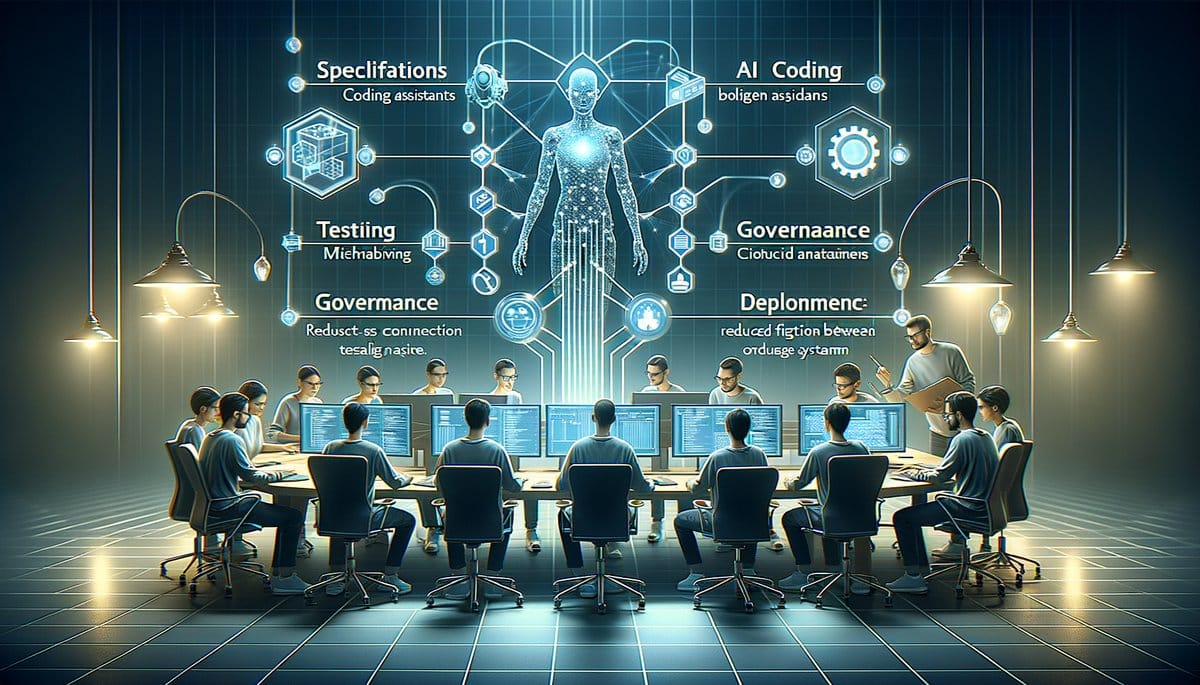
Fast code without proof is just a nicer liability
This is where I get less diplomatic.
If your AI can spit out code in minutes but you can’t verify quality, trace decisions, or prove compliance, that is not productivity. That is deferred pain with a slick UI. Startups love calling process “bureaucracy” right up until one bad release lights customer trust on fire and suddenly everybody rediscovers the beauty of controls.
That’s why the Tricentis move matters. SD Times covered their agentic quality engineering platform, with AI Workspace positioned as a control tower: shared context, integrated workflows, agent-to-agent collaboration, plus governance, approvals, and auditability built into execution. That’s the important part. Testing and QA are no longer the chore you do after the fun part. They’re part of the same operating system.
Kevin Thompson, their CEO, said enterprises want speed but “can’t afford to introduce risk through unsecure or low-quality AI-generated code.” Which sounds obvious, but somehow still feels controversial in rooms full of people trying to ship by Friday.
I’ve seen this movie before. A fast team with weak controls feels amazing right up until it doesn’t. Then you’re doing incident reviews, customer calls, trust repair, and that special kind of internal postmortem where everyone politely avoids saying, “yeah, we all knew this was sketchy.” The rollback pain alone can erase whatever speed advantage you thought you had.
That’s why developer productivity tools in 2026 are pulling testing, governance, and auditability into the same stack as AI coding assistants. Quality is becoming a multiplier, not a tax. If better controls reduce downtime, lower rollback frequency, and keep security from turning into a recurring emergency meeting, that counts as productivity. Real productivity. The kind your finance team understands and your engineers don’t have to apologize for.
Nobody brags onstage about the release that didn’t explode.
But those are the teams quietly winning.
The teams getting 4x are boring in the right way
This is probably my strongest opinion in the whole piece: the companies getting outsized gains from AI are not the ones with the cutest prompt library. They’re the ones boring enough to connect their tools to reality.
VentureBeat reported that EY saw up to 4x to 5x coding productivity gains when teams connected AI agents to internal engineering standards, repositories, and compliance frameworks. Not when they used standalone code generators as fancy autocomplete on steroids. When they wired the agents into actual company context. Standards. Rules. Repos. Guardrails. The stuff nobody wants to put in a launch video because it looks like homework.
That distinction matters more than almost anything else in the software engineering productivity conversation.
Solo-dev demo productivity is real. I’m not denying that. But it is not the same thing as company productivity. One gets you a viral clip. The other survives security review, onboarding, maintenance, audits, edge cases, and the inevitable moment when someone who didn’t build it has to understand it. Those are different sports. Five-minute vibe-coding clips are basketball trick shots. Running a production engineering org is, unfortunately, still actual basketball.
I know that sounds harsh, but I’ve watched teams fool themselves with isolated AI wins. One engineer gets dramatically faster. Great. Then the output crashes into inconsistent standards, missing context, unclear specs, weak tests, and no governance. Suddenly the “speed” is just moving the mess downstream faster. Congrats. We invented a more efficient way to create rework.
The teams that are really winning with developer productivity tools in 2026 are using developer automation as a system, not a talent hack. They connect code generation to engineering standards. They connect specs to implementation. They connect testing and QA automation to release confidence. They treat agentic workflows like infrastructure, not like a sidecar app living in a browser tab.
That’s why I don’t buy the lazy “AI replaces developers” take. Too simplistic. Too Hollywood.
What I do buy is this: developers working inside well-instrumented systems are going to replace teams still freelancing their process.
And yeah, that sounds less romantic than “my copilot writes everything.” But romance is overrated in infrastructure. Ask anyone who has ever been paged at 2:13 a.m.
By the end of 2026, I don’t think the teams calling themselves AI-native will be the ones generating the most code. I think they’ll be the ones with the least wasted motion. Fewer ambiguous specs. Fewer pointless reviews. Fewer broken handoffs. Fewer “how did this ship?” moments. Fewer little lies disguised as velocity.
That’s what the best developer productivity tools in 2026 are really doing. Not making developers type faster. Making the whole system less stupid.
And if that sounds less exciting than the hype, good. The hype was always the tourist menu. The real stuff is in the back.